GEO Audit Checklist: Diagnose AI Search Visibility
Use this GEO audit checklist to assess brand accuracy, content gaps, source quality, and website access. Understand what a useful review should deliver.
Updated
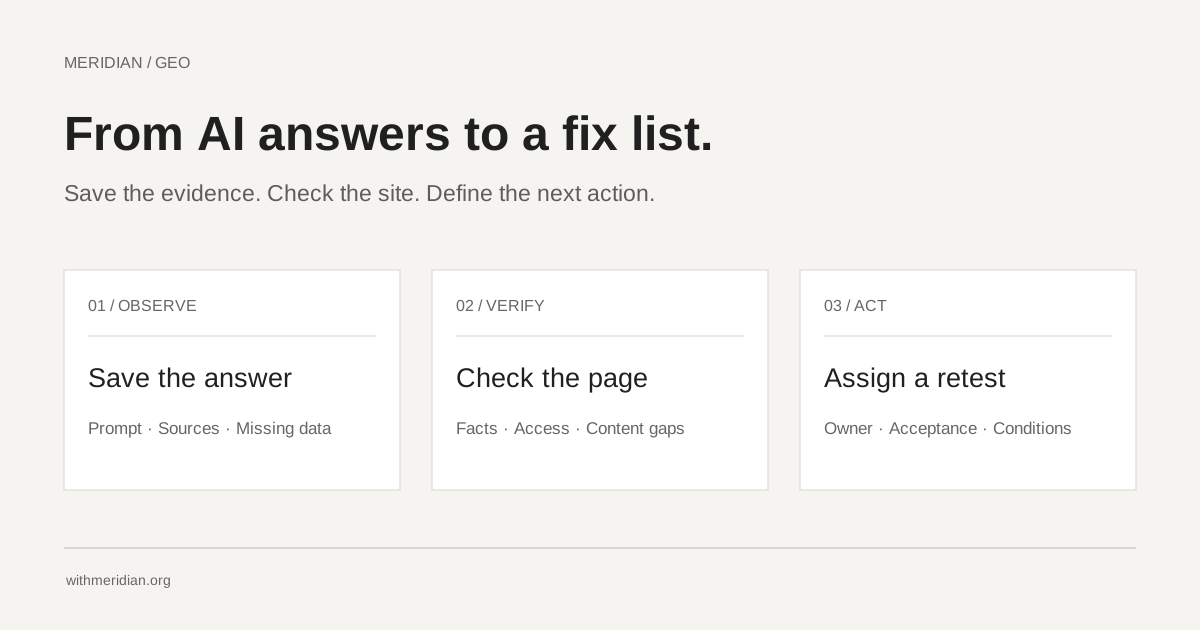
A GEO audit reviews how AI answers represent your business, the information available about it, and the gaps that may make it harder for buyers to understand your offer. A useful review should explain the issues, their business relevance, and the improvements worth considering.
This guide covers the main assessment areas and what to expect from the findings. Use the short GEO audit preparation checklist to organize your business priorities before a discussion.
GEO audit checklist: what to check and save
A review is most useful when it relates to a real customer decision. The following areas help you judge whether the proposed scope addresses your needs.
Swipe horizontally to view the complete checklist.
| Area | What to look for | Why it matters |
|---|---|---|
| Audience and scope | The relevant buyer, market, language, and offering are clear | Findings need a defined business context |
| Brand accuracy | Descriptions reflect your actual products and services | Incorrect descriptions can mislead potential customers |
| Useful content | Key buying questions have understandable answers | Buyers need enough information to judge fit |
| Sources and proof | Important claims have relevant supporting material | A confident answer alone is not evidence |
| Website access | Important public information is available and readable | Access and presentation problems may obscure useful content |
| Responsibilities | Recommendations explain the affected pages and who can help | Findings should support an implementation discussion |
The downloadable checklist is a brief preparation aid. It helps clarify your goals, available materials, and concerns.
Choose the questions before running the audit
Start with what customers need to decide: whether your offering fits their situation, how it differs from alternatives, and what evidence supports it. A business with a clear audience and offer can frame a more useful review than one seeking a single score for everything.
It is helpful to distinguish whether a brand is discovered during a broad search from how it is described once a customer already knows its name. These answer different business questions. A good description of a named company does not establish that new buyers will find it.
For example, a marketing team may want to know whether its service category is clear and whether prospective customers can understand the division of responsibilities. These are areas to investigate, not a fixed test script.
Our Prompt Search service helps clarify relevant customer demand and content opportunities. The agreed scope depends on the business, market, and available information.
Capture answers, citations, and missing evidence
A useful audit explains what its observations do and do not establish. A brand mention, a recommendation, and a link to a website are different signals; they should not be treated as interchangeable proof of success.
Supporting sources matter too. A product document may support a capability claim, while a provider's own promotional page does not independently prove performance. Missing information should remain an acknowledged limitation.
Ask whether the report connects its findings to relevant website content and approved business facts. A screenshot or visibility score without that context may leave you unsure what to change. AI answers can vary, so a single answer should not determine an entire strategy.
Check page access and the facts AI describes
An AI answer is a lead to investigate. Confirm each apparent defect against the actual website before creating a task.
Technical GEO checks
Inspect a representative product or service page, a comparison or explanatory page, and the evidence page relevant to your questions. Record whether each returns the intended response, requires sign-in, redirects unexpectedly, or presents a bot challenge. Then check the rendered page and the content available before interaction. A successful HTTP response alone does not prove the important text was obtained.
Review robots rules and hosting restrictions for the particular platform you intend to support. OpenAI distinguishes OAI-SearchBot for search from GPTBot for model training; those controls are independent. ChatGPT-User serves certain user-initiated visits and is not the search-inclusion control. Check the official crawler definitions, reviewed September 21, 2026, before changing a rule. Keep private areas protected.
For Google's AI search features, review page indexing, snippet eligibility, and the site's applicable Search Console inclusion settings. Google's generative AI search guidance, checked September 21, 2026, does not prescribe a special AI schema or llms.txt requirement. Check the actual site's settings and available reports; completing technical checks does not guarantee display. These are Google-specific rules, not a description of every chatbot.
Check canonical and language URLs so the intended version can be identified, then follow internal links to the supporting evidence. If the underlying issue is ordinary indexing, use the discovered-but-not-indexed troubleshooting guide. Crawler visits, indexing, a visible citation, and a business inquiry are separate observations.
Content and brand checks
Compare the answer with approved product facts, visible pricing or quote conditions, implementation responsibilities, and public case material. Can a buyer tell whether an offering is a service or software? Are important limits visible without opening an accordion? Do screenshots have enough adjacent text to explain what they show?
Map each question to the best existing page. If that page already serves the decision, identify the missing passage or evidence instead of automatically creating a new URL. A claim that no case study exists should trigger an actual site check; it is not permission to invent a new success story. The SEO content brief template explains how an agreed content need can be communicated to an editor.
A GEO audit example: clearer service information
A review of our own website highlighted a familiar problem: information that makes sense to a team may still be unclear to an outside reader or an AI system. Service descriptions and important limitations needed particular attention.
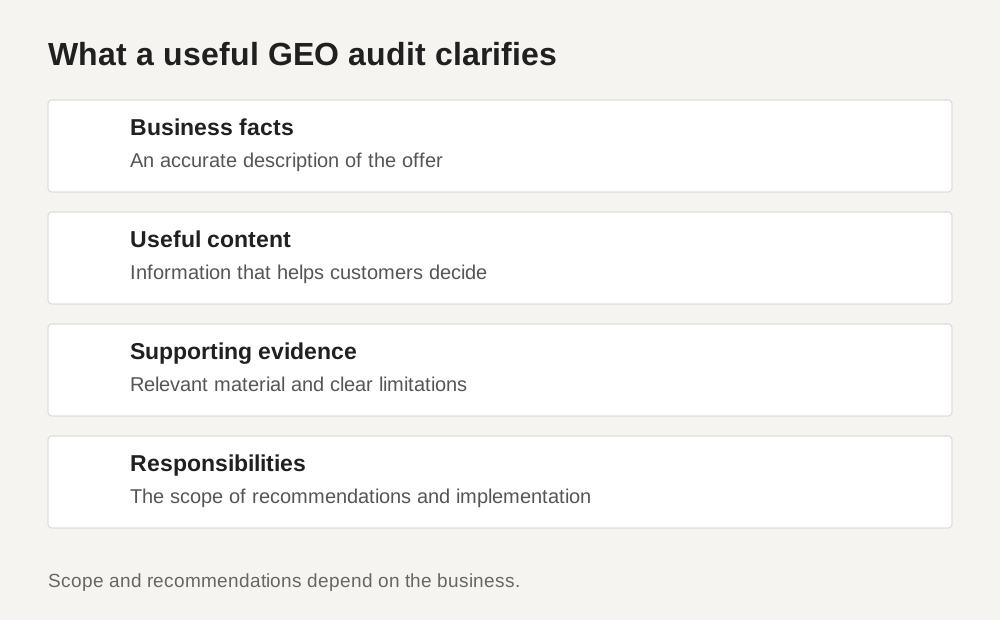
The broader lesson is straightforward. A visitor should be able to tell whether an offering is a service or software, what it includes, and where its boundaries lie. Clearer language can make the offer easier to understand; it does not by itself prove an improvement in AI visibility.
Turn findings into a fix and retest plan
The report should help your team understand the main issues, the relevant evidence, and the proposed improvements. Recommendations should distinguish a content problem from a product or commercial decision. Missing pricing information, for example, may require input from the business owner.
Agree who can approve factual changes and who can implement them. Content, technical work, and ongoing review may involve different people or service scopes. Ask what the engagement includes and what would need a separate agreement.
Ongoing GEO monitoring and review can support later discussions about change over time. An updated page and a better AI answer are separate observations; neither automatically establishes a business result. For conventional technical-diagnostic proposals, our SEO audit cost and scope guide addresses a related but distinct buying decision.
If your immediate problem is a missing citation, an incorrect brand description or a recommendation that does not fit, the ChatGPT visibility troubleshooting guide helps distinguish those symptoms and identify the next evidence to check.
GEO audit FAQs
Is a GEO audit the same as an SEO audit?
They share technical and content checks. A GEO audit also examines sampled AI answers, sources, brand descriptions, and question coverage. Define the platforms and outputs rather than assuming a familiar label includes them.
Can I audit without paid software?
You can start with available AI interfaces, a spreadsheet, and website checks. Record what you can actually observe. Missing account reports or incomplete source capture remain unknown; software access alone does not validate an answer or its interpretation.
How many prompts should I test?
There is no universal number. The appropriate scope depends on your offering, market, and the decisions the review is meant to support. Agree on coverage and limitations rather than choosing a provider solely by the number of questions promised.
Does passing the checklist guarantee citations?
No. The checklist helps identify verifiable issues and organize work. It cannot control a platform's choice of answer or sources, and a citation does not guarantee an inquiry.
Discuss the next step for your site
Bring your website, target market, and the business questions you want the review to clarify. We can use those inputs to discuss Meridian's GEO research, content, and monitoring scope, including who validates product facts and who implements changes. The guide and preparation checklist are free resources; the scope of any service is agreed separately.