How to Outsource SEO: Scope and Handoff
Decide what SEO work to outsource, compare delivery models, and agree ownership. Includes SaaS examples and a downloadable scope and acceptance worksheet.
Updated
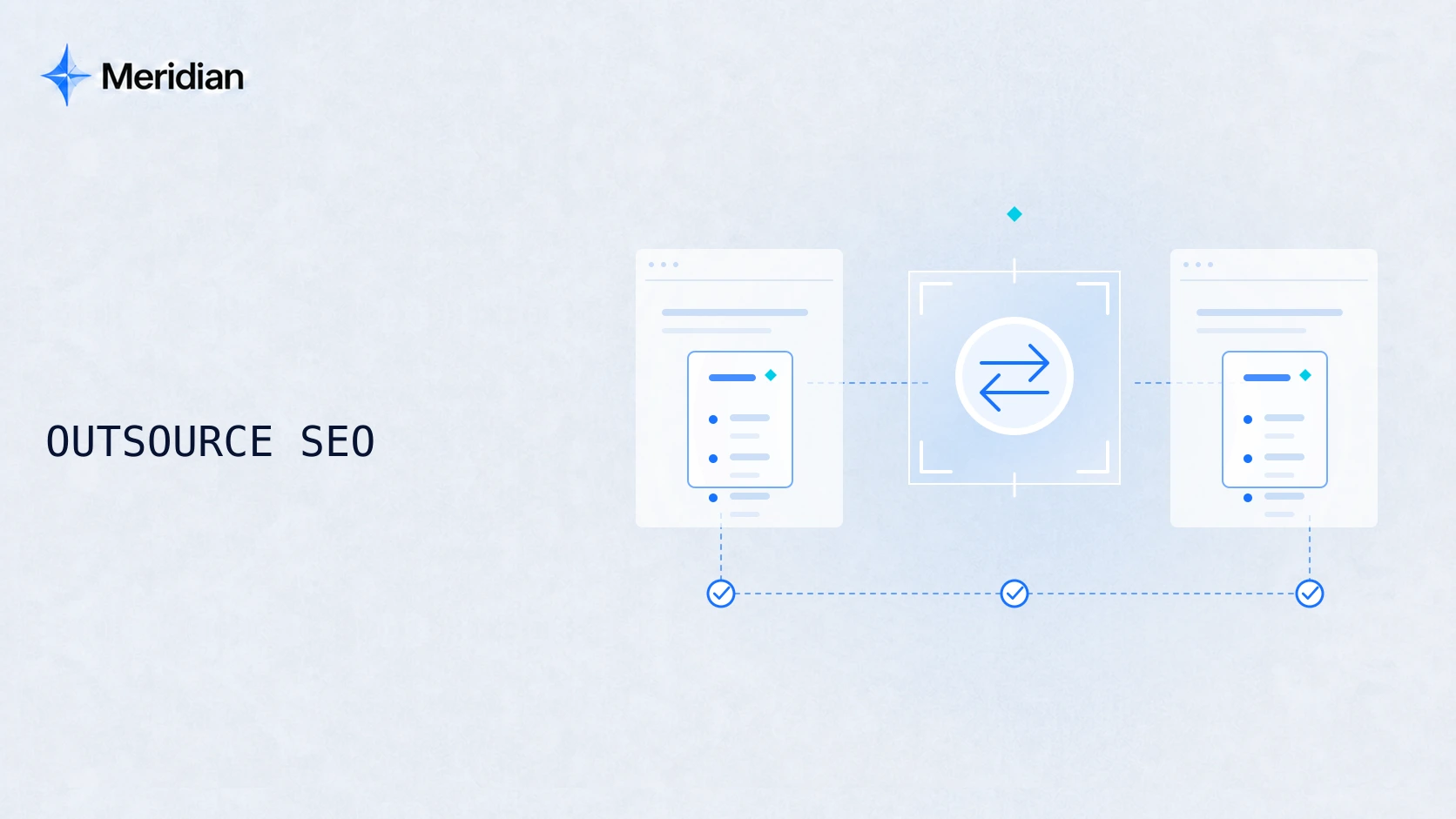
To outsource SEO, define the business problem, choose a bounded scope, assign an internal owner, and agree how the work will be accepted before choosing a provider. Your partner can supply research, expertise and production capacity. Your team still needs to validate product claims, approve priorities and make the agreed website or product changes.
This guide is for AI and SaaS companies buying SEO support. Start with the scope and handoff worksheet, then use the examples to decide what to delegate.
Decide whether outsourcing solves your current bottleneck
Outsourcing helps when the missing capacity is identifiable. A launch team may need demand research and a first page plan. An established product may need a repeatable content process. A site losing organic traffic may need a technical diagnosis before increasing production.
Write one sentence: “We need someone to deliver ___ so that our team can decide or do ___.” If you cannot fill it in, scope a discovery phase with a defined output rather than an open-ended production commitment.
Keep work in-house when it depends on daily product decisions, sensitive customer conversations or fast engineering changes your partner cannot make. You can still buy specialist review. Hiring is often a better fit when the work requires a continuous internal owner and you have the management capacity to support that role.
Choose a model that fits your team
| Model | Useful when | What to buy | What your team must provide |
|---|---|---|---|
| Expert direction or coaching | Writers and developers can execute but need priorities and review | Research, planning, training and scheduled review | Production, implementation and a decision owner |
| Specialist project | One defined question or task is blocking progress | An audit, migration plan, research project or agreed set of drafts | Access, subject expertise and the implementation owner |
| Managed delivery | A recurring production gap has a stable scope | Explicit research, writing, outreach or reporting deliverables | Product accuracy, approvals and any excluded publishing or engineering |
| Internal hire with specialist support | Day-to-day coordination is the main need | A permanent owner plus occasional specialist help | Hiring, management, systems and budget |
“Managed” does not establish what is included. Ask separately about complete drafts, design, CMS publishing, code changes and post-release checks. Meridian's SEO engagement options distinguish guidance from delivery; full writing and website implementation require an explicit scope.
For a budget discussion, use the SaaS SEO pricing guide. A monthly fee and a one-off investigation should be compared by their outputs and responsibilities, not as interchangeable prices.
Tie the work to your product's buying path
A self-serve AI tool needs a path from an appropriate search to registration, a first useful action and paid use. An enterprise SaaS product may need a path from a high-value team problem to a Demo, qualification and a sales opportunity. Agree the definitions before reporting conversions.
Illustrative self-serve project: an AI meeting tool supports transcription and a downloadable notes template. A partner researches feature and template demand, proposes pages and drafts the agreed content. The product owner checks accuracy; the web team publishes; the product team verifies the signup and first-transcript events. A template download alone is not activation.
Illustrative enterprise project: a knowledge-base product serves support teams. A partner maps team questions to a use-case page and an evaluation guide. A subject expert checks permissions and security statements. Sales owns Demo follow-up and defines what qualifies as an opportunity. A named integration is included only if it works today.
These are planning examples, not Meridian client results. Product changes, trial design, pricing and sales follow-up need their own owners; an SEO contract does not automatically cover them.
Write a scope that another team can execute
A useful scope names the destination, the deliverable, the reviewer and the acceptance check. For each task, identify one person who can approve it and a date for the next decision. The matrix below is a starting point for negotiation, not a description of every package.
| Work | Proposed delivery owner | Client contribution | Acceptance check |
|---|---|---|---|
| Demand research and page plan | SEO partner | Product capabilities, customer questions and market priorities | Exact queries, sources, intent, existing/new URLs and reasons for the first queue |
| Brief and complete draft | Partner if separately included | Subject review and approved claims | Required questions answered, sources checked and revisions resolved |
| Design, code and publishing | Named web team unless explicitly purchased | CMS/staging access and release approval | Page renders, links work, language and indexing settings match the plan |
| Product or sales measurement | Product/analytics or sales owner | Event definitions and permitted data access | Events tested; registration, activation, Demo and qualified opportunity kept distinct |
| Review and next priorities | Partner and internal decision owner | Release dates, product changes and sales feedback | Completed work, observed results, limitations and next decisions recorded |
Download the SEO outsourcing scope and handoff worksheet. It includes a blank responsibility table, acceptance checks, scope-change fields and an exit checklist.
Meridian's own technical audit record gives a concrete example of the handoff format: a query-language URL changed to a dedicated Chinese route, with redirects and language signals checked separately. It demonstrates a finding and implementation record; it does not establish a traffic or revenue lift.
Evaluate the provider's work before committing
Ask for an example close to your problem: a query-to-page plan, a sourced draft, a reproducible audit finding or an outreach delivery record. Then ask what was actually delivered, who implemented it and which results were measured. A logo or traffic chart alone does not answer those questions.
Google's guidance on hiring an SEO recommends asking for realistic estimates, allowing read-only Search Console access for an initial audit and avoiding providers who guarantee first place. Use access appropriate to the agreed task and keep ownership of your accounts.
Compare how candidates handle an ambiguous request. Can they explain why a page should be updated rather than duplicated? Can they say when development or product work is needed? For broader supplier comparison, see choosing a SaaS SEO agency.
Start with a bounded first cycle
Agree an initial decision gate instead of expecting immediate search growth. A first cycle can establish the baseline, approve a short queue, complete a representative deliverable, publish the agreed work and review what was learned. Set actual dates around access, review capacity and engineering availability.
Track delivery and outcomes separately. Delivery includes reviewed drafts, implemented fixes and accepted handoffs. Search observations include indexation, relevant queries and clicks. Business observations include activated signups or qualified Demos where measurement is available. Annotate releases and other changes so a traffic movement is not automatically attributed to the agency.
If approvals or implementation block the queue, resolve that constraint before buying more drafts. Use the SEO content strategy guide to choose what enters the next cycle.
Plan changes and the eventual handoff
Record what happens when a new market, template or product feature expands the scope: who estimates the added work, who approves it and how dates change. Agree revision rounds, support windows, cancellation terms and what happens to unfinished work.
At exit, collect editable files, the URL/keyword map, change history, source references, delivery records and outstanding tasks. Confirm account ownership, transfer necessary access and remove obsolete permissions. Reporting should remain interpretable by your next team.
SEO outsourcing FAQs
Can we outsource all SEO work?
You can contract a broad scope, but product truth, business priorities and final approval still require an internal owner. Writing, publishing, engineering and analytics must each have an explicit delivery owner.
How much does SEO outsourcing cost?
It depends on the task, markets, production volume, implementation and support. Ask for comparable scope and account for internal time. A price without those inputs cannot tell you whether the work is affordable or complete.
Should an agency outsource delivery to another agency?
That is a separate white-label purchasing task. Agree confidentiality, who contacts the end client, report branding, quality control, turnaround, rework and margin. This guide's company-to-provider examples do not establish those terms.
How soon should we evaluate the partnership?
Review access, communication and deliverable quality during the first agreed cycle. Search and business outcomes need an observation period appropriate to the site and work; neither a fixed ranking date nor a universal payback period is promised here.
Define your first outsourced scope
Bring your website, buying model, current bottleneck, internal team and the work you want to delegate. Review Meridian's SEO scope and available case evidence, then decide which output would make the first engagement useful.