Why Is My Website Not Showing in ChatGPT? What to Check
Website not showing in ChatGPT? Distinguish missing mentions, citations and recommendations, then choose the evidence, owner and next check that fit the problem.
Updated
Why is my website not showing in ChatGPT? The answer may involve access, incomplete public information or a mismatch with the requested recommendation. A missing mention alone does not tell you which applies.
Start by identifying what is absent, then investigate the evidence needed to choose a useful action. This guide uses three hypothetical situations to show what a developer, content owner or business team should handle—and what would count as resolving the issue.
Why is my website not showing in ChatGPT?
First, define the result you expected:
- Mention: your business is named. It may appear without a link or a positive recommendation.
- Own-site citation: the answer links to a page on your website as a source. A third-party article mentioning you is a different destination.
- Recommendation: the answer suggests your business as a suitable choice for the stated need. This may or may not include an own-site citation.
You can have one without the others. If your brand is named but the source link goes to a comparison site, your business is not completely absent; your own page was not the cited source in that answer.
Also check whether you are reviewing an answer that used web search. A conversation without a web search does not test whether your current page can be found in search. OpenAI's search guidance, checked September 29, 2026, explains web search and source inspection and makes clear that placement is not guaranteed.
Check search access without confusing it with training
OpenAI's crawler documentation, checked September 29, 2026, distinguishes three roles:
- OAI-SearchBot: automatic discovery for ChatGPT search.
- GPTBot: crawls material that may be used to train models; its controls are independent of search.
- ChatGPT-User: visits associated with certain user actions, rather than automatic crawling. It does not determine search eligibility, and robots.txt rules may not apply to those user-triggered requests.
A website can allow search access while declining training access. Do not change that business decision simply because one answer omitted your brand.
For a suspected access problem, ask the developer to check the affected public page, its readable content and the applicable robots, host and CDN rules. OpenAI's search guidance also calls for allowing its published searchbot IP ranges. A successful ordinary browser visit does not establish that the searchbot received the same response.
A request labeled ChatGPT-User is not proof of automatic search discovery. Likewise, an allowed crawler or a successful request does not prove the page was selected for an answer.
Three situations that call for different next steps
These are hypothetical editorial examples, not Meridian client results or a list of proven causes in order of frequency.
1. The page opens for a person, but search access may be blocked
Observed: the service page loads in a browser, while a security report records a blocked request associated with the relevant search crawler.
Evidence still needed: whether the request was genuine, whether it affected this page, and which rule produced the response. Changing a user-agent label in a test alone does not answer those questions.
Who handles it: the developer or hosting/security owner investigates the restriction against the site's intended access policy.
Acceptance: the responsible team verifies that the identified restriction is resolved and the intended public content is accessible. That closes an access issue; it does not establish that ChatGPT will cite the page.
Meridian's technical SEO audit scope explains how confirmed access and indexation findings become development tasks.
2. The brand is mentioned, but a third-party page gets the citation
Observed: an answer names the business and links to a directory. The company's own page gives only a broad description of what it does.
Evidence still needed: what fact the citation supports and whether the official page actually answers that part of the buyer's question. The observed choice alone does not prove that ChatGPT distrusts the website.
Who handles it: the content owner checks the public page with the product or service team. Useful additions might include actual capabilities, supported markets, delivery scope, pricing basis, limitations or an authorized example—whichever facts are missing and relevant.
Acceptance: the existing page clearly supports the intended claim with accurate information. Inspect later answers separately to see whether the cited destination changes. More text, or another page, is not automatically the right fix.
3. The business is missing from a recommendation for a specific need
Observed: a buyer asks for an option suitable for a particular market or integration. The answer recommends other providers, and the business's public materials do not clearly establish that fit.
Evidence still needed: whether the business genuinely meets that requirement, and whether current public information makes the relevant capability and limits clear.
Who handles it: the product or commercial owner confirms suitability; an editor updates inaccurate or incomplete public information. If the requirement is unsupported, changing the claim would mislead readers.
Acceptance: the page accurately explains who the offering serves and what it can deliver. A later recommendation is a separate observation, not a promised result of the edit.
Verify the fix before claiming better visibility
Use an acceptance condition that matches the work. Resolving a blocked request, correcting a service claim and observing a new citation are three different results.
Keep a dated example of the original issue and the relevant change. When reviewing later answers, compare equivalent business questions and conditions, and check what the source link actually supports. One favorable response does not establish a sustained improvement or an increase in inquiries.
If the team cannot yet narrow the problem to a page, claim or access issue, the broader GEO audit checklist explains what an assessment should cover. The next deliverable should make the uncertainty smaller and identify who can act on the finding.
ChatGPT visibility troubleshooting FAQ
How do I rank on ChatGPT or in ChatGPT search?
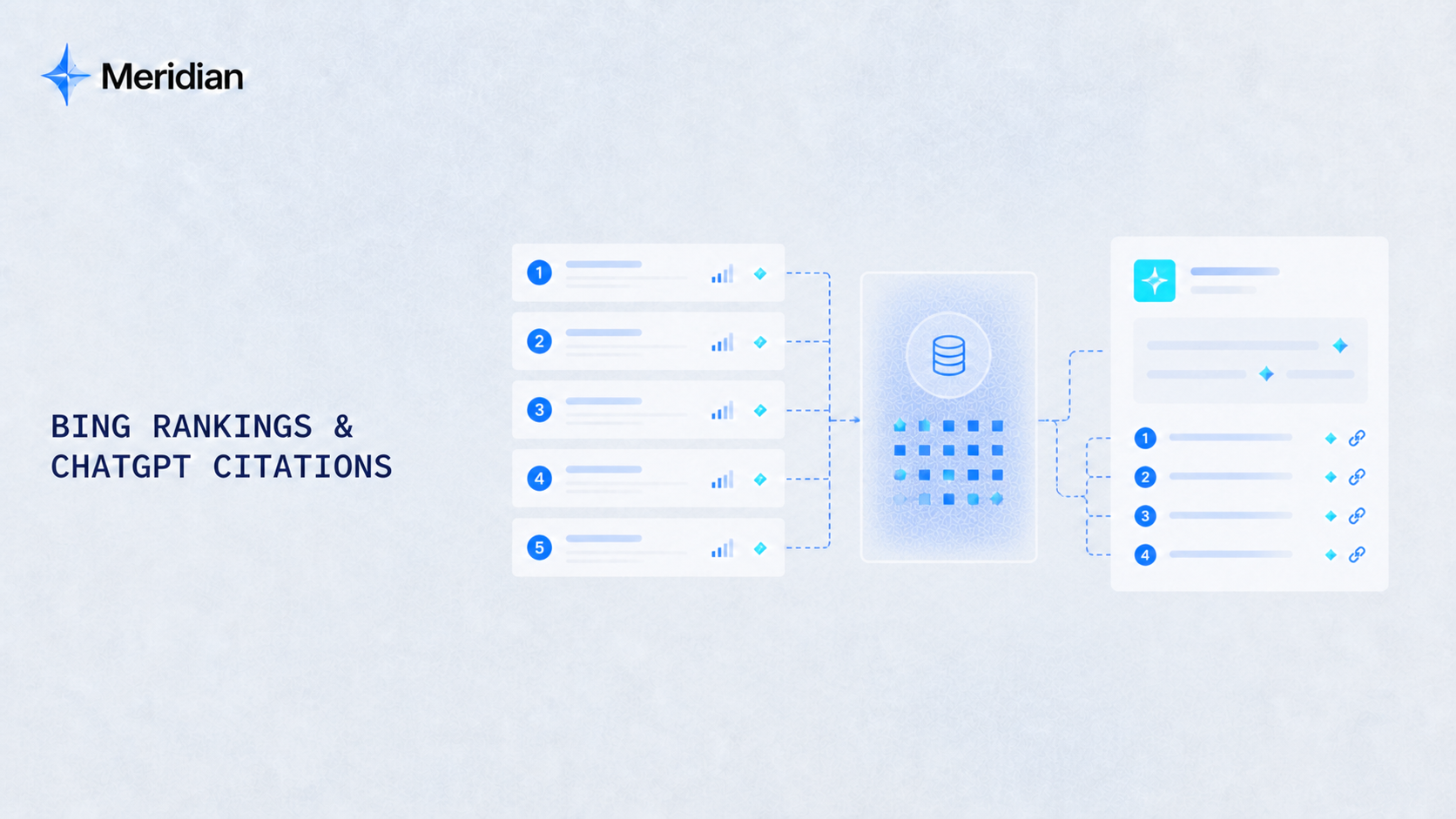
Define the intended outcome first: being mentioned, cited or recommended for a relevant need. A numbered recommendation in one answer is not a stable search ranking. Investigate a specific gap rather than treating every absence as the same optimization problem. Our Bing rankings and ChatGPT citations case review explains why search rankings alone cannot establish a citation's source.
Will a special format, llms.txt or submission guarantee a recommendation?
No recommendation guarantee follows from the official search guidance above. A formatting change or submission receipt is not evidence that your business was recommended. Judge the work by the information it makes available and verify any claimed outcome separately.
How long should I wait after a fix?
There is no universal citation deadline established by the guidance cited here. First verify the specific repair or content change. Then assess subsequent observations in the agreed review period. “The change is live” and “the visibility problem is resolved” should remain separate conclusions.
Choose a focused next step
Bring your website, target market and an example of the mention, citation or recommendation you expected. Through GEO monitoring and review, we can discuss what the available evidence shows, which team should investigate next, and how to judge the resulting work.