Listicles and GEO: Why Structured Lists Are Easier for AI to Cite
List structure can improve extraction, but it does not guarantee citations. Learn how evidence, structure, crawlability, and source selection interact in generative engine optimization.
Updated
The short answer: lists improve extraction, but evidence and retrieval eligibility matter more
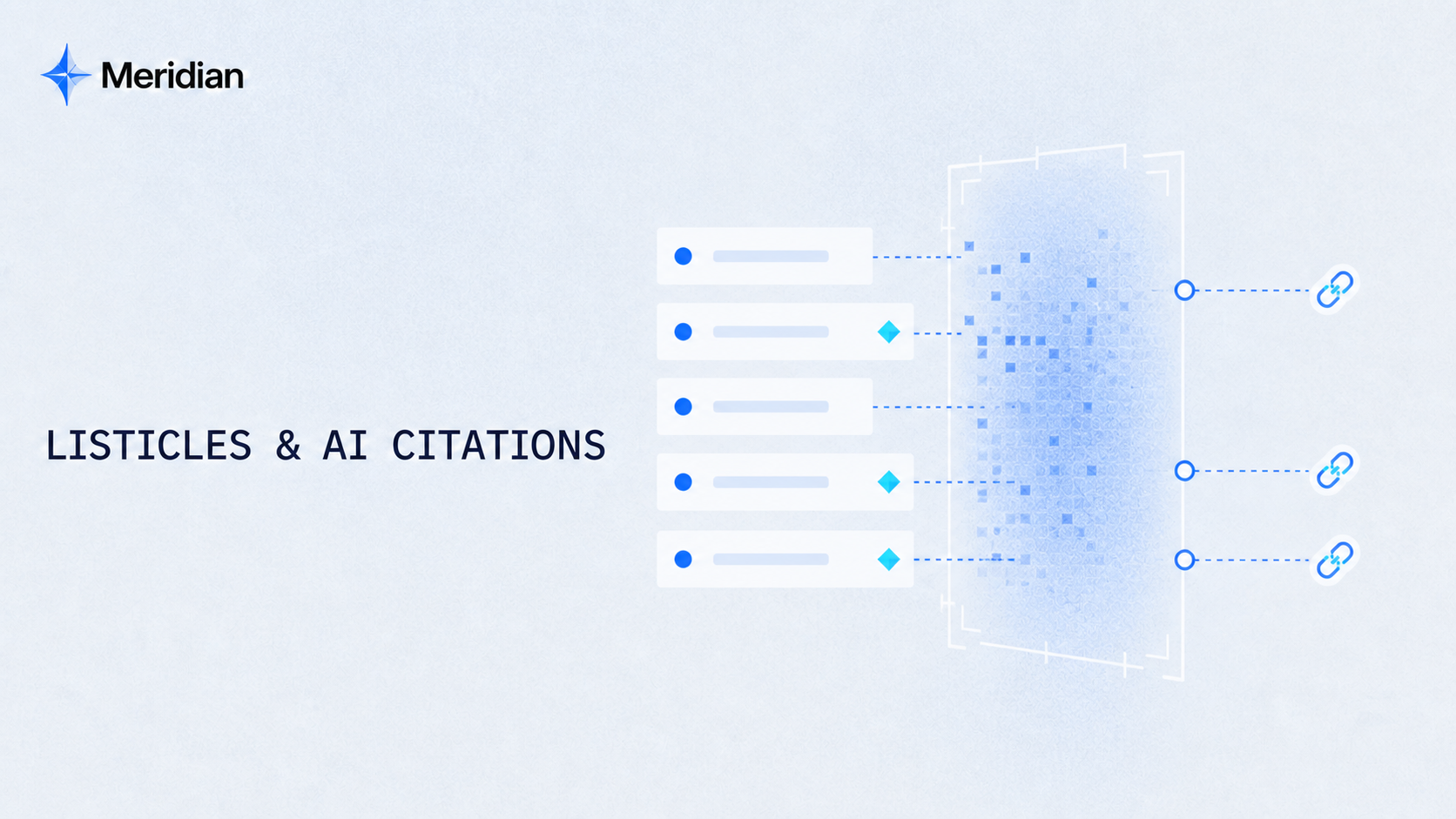
A listicle separates information into independent entries, helping AI systems identify entities, compare options, and extract answers. That makes the format a natural fit for tool recommendations, steps, examples, and comparisons. No research, however, proves that “writing a list guarantees a ChatGPT citation.” The page must also be crawlable, relevant, trustworthy, and genuinely useful.
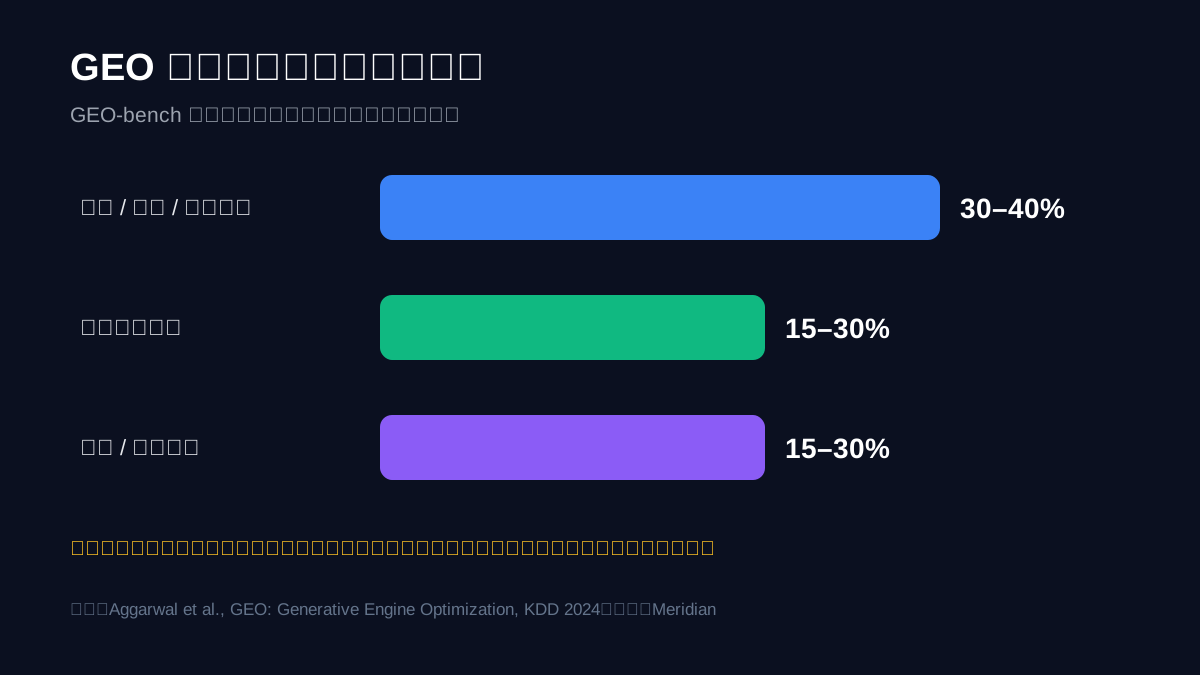
Aggarwal and coauthors reported that high-performing methods such as adding reliable citations, statistics, or authoritative quotations produced roughly 30%–40% relative gains on a position-adjusted word-count metric and about 15%–30% on a subjective impression metric in GEO-bench. These are relative changes inside a fixed experiment—not organic citation rates or production traffic growth. See the KDD 2024 paper.
Why listicles are machine-readable
Each entry is an independent answer unit
A clear heading can bind a product name, audience, evidence, and limitation inside one local section. A retrieval system does not have to interpret the entire article to understand the subject of the passage.
Comparison criteria are explicit
A strong list defines its selection criteria first and applies the same dimensions to each option. This creates a more consistent comparison than an essay-style collection of recommendations.
User intent is often specific
“Ten AI image tools for designers” defines an audience, category, and use case. Clear entities help search systems interpret the page, although the number in the title is not itself a quality signal.
What the GEO research actually established
The GEO paper systematically compared content optimization methods inside a benchmark environment. It supports several limited conclusions:
- reliable citations, statistics, and relevant quotations may improve visibility in generated answers;
- fluency and readability improvements can also help;
- results vary across subject areas;
- more keywords or jargon is not a universally effective strategy.
A 2026 critical survey notes that the foundational experiment assumes a source is already present in a fixed context. It therefore does not prove natural discovery, persistent citation, or traffic gains. See the Critical Survey of GEO 2023–2026.
Presenting “30%–40%” as an increase in ChatGPT citation rate is a misinterpretation.
What a citation-ready listicle should contain
| Component | Minimum requirement | Purpose |
|---|---|---|
| Selection method | Sample, date, inclusion and exclusion rules | Lets readers judge fairness |
| Independent entries | Entity, conclusion, evidence, limitation | Supports accurate extraction |
| Primary sources | Official documentation, papers, or firsthand data | Supports verification |
| Comparison table | Consistent dimensions with unknowns labeled | Avoids subjective collections |
| Update history | Record material changes | Controls stale information |
| Disclosure | Sponsorship, affiliate relationships, own products | Exposes potential bias |
Google's people-first content self-assessment asks whether content demonstrates firsthand expertise, helps readers achieve their goal, and makes the author trustworthy. See Google's helpful content guidance. Those qualities matter more than mechanically applying a list template.
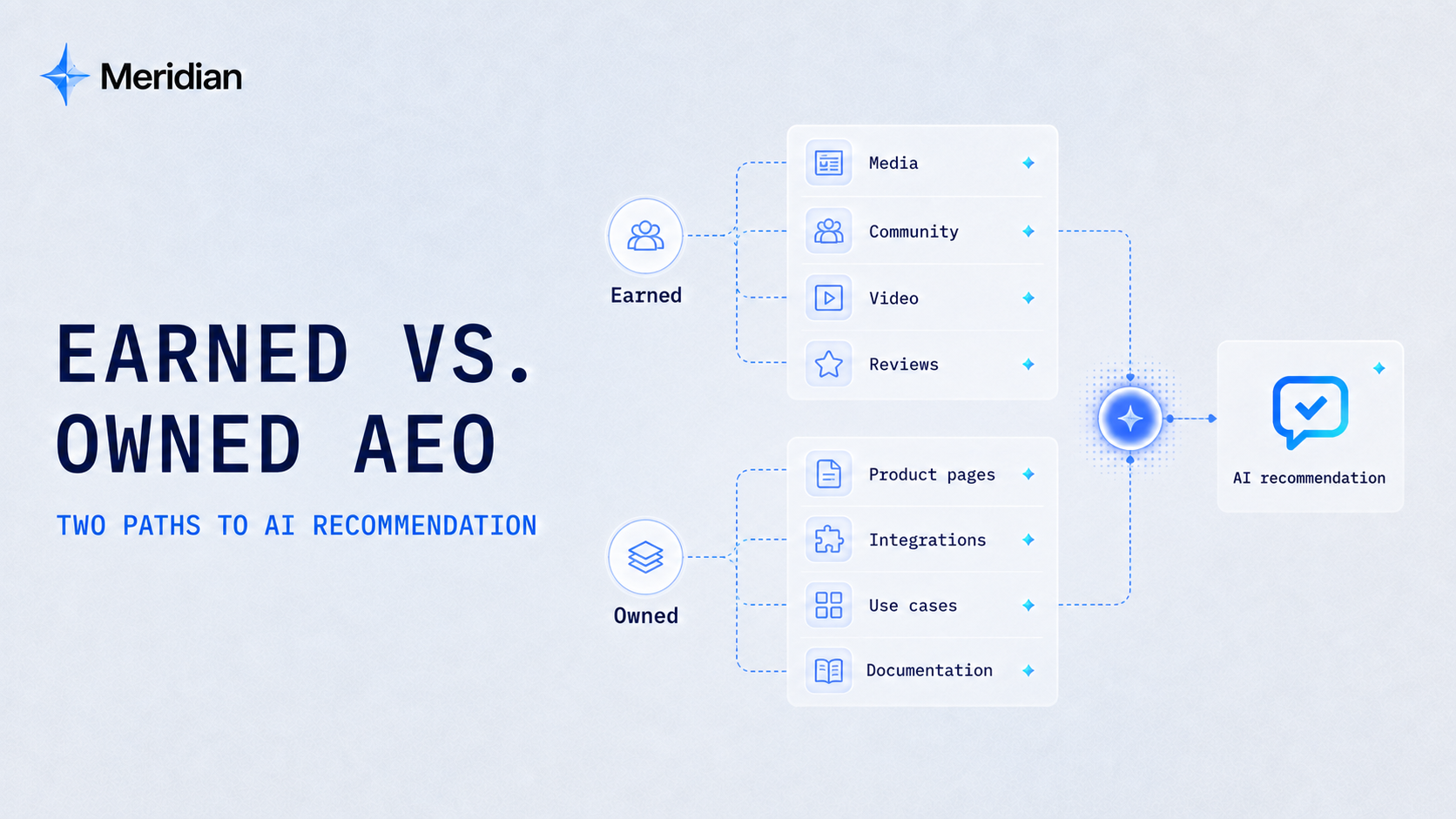
On-site and third-party lists serve different purposes
On-site lists support a complete decision
A brand blog can provide deep comparisons, screenshots, selection steps, and conversion paths. If the publisher ranks its own product first, it should disclose the commercial relationship.
Third-party lists provide independent validation
Industry publications, communities, and YouTube content are valuable only when they serve their own audiences. Publishing controlled advertorials at scale on third-party sites may create site reputation abuse risk rather than trust. See Google's spam policies.
Repetition across channels is not new value
Lightly rewriting the same article for ten platforms does not automatically build entity authority. Each version should fit the channel and add an independent discussion, demonstration, or dataset.
The path from extraction to citation
Crawling is allowed
  → a search or retrieval system discovers the page
  → the page is relevant to a specific query
  → the content can be extracted accurately
  → the system selects the source
  → the source appears in a generated answer
OpenAI says public sites that want to appear in ChatGPT Search should allow OAI-SearchBot and avoid blocking its published IP addresses at the host or CDN. Eligibility does not guarantee inclusion. See OpenAI's ChatGPT Search guidance.
Google likewise says AI search features do not require a special shortcut: foundational SEO and content quality still apply. Thin pages generated for query variations may violate scaled content abuse policies. See the Google AI search optimization guide.
A listicle writing SOP
- Constrain the question. Define the audience, scenario, and date.
- Publish the criteria. Choose dimensions before reviewing the winners.
- Document the sample. State test count, date, region, and exclusions.
- Use a consistent entry structure. Include conclusion, evidence, fit, and limitations.
- Cite primary sources. Product capabilities go to official docs; findings go to the original paper.
- Add firsthand evidence. Use real screenshots, test notes, or privacy-safe case studies.
- Set a review date. Recheck software and platform lists at least every six months.
For crawlability, schema, and internal links, review technical SEO, on-page SEO, and our case study on how Bing rankings can drive ChatGPT citations.
Common mistakes
Adding weak entries to reach a larger number
A “Top 50” is not inherently better than a “Top 7.” Untested, repetitive entries reduce information density.
Using citations as decoration
A citation must directly support the claim and lead to a verifiable primary source. An unrelated expert quotation only creates the appearance of authority.
Treating structure as causation
Finding that visible sites publish more lists only produces a hypothesis. Authority, indexing, topical coverage, and branded demand may all affect the outcome.
For examples beyond listicles, see our GEO content examples and editorial notes: service explanations, commercial comparisons, and evidence statements, with the reader question each example needs to answer.
FAQ
Are listicles always more likely to earn ChatGPT citations?
No. Lists support extraction, but citations also depend on crawling, relevance, source selection, retrieval mechanics, and site trust. Use the format when it naturally matches the intent—not as a ranking trick.
Is the GEO study's 30%–40% figure a citation rate?
No. It primarily describes relative improvement in an experimental visibility metric while the sources were already inside a fixed context. It cannot be converted directly into discovery, citation, click, or revenue rates.
Should every article be a listicle?
No. Definitions, opinions, case studies, and complex tutorials may benefit from narrative or sequential structures. Lists are natural when users need to compare options, execute steps, or browse examples.