How to Choose a Product Growth Channel: SEO, Social, or Paid Ads
Not every product is a fit for short-form video or SEO. Use this framework to choose a growth channel based on demand, team capabilities, feedback speed, and compounding value.
Updated
The short answer: the channel must fit both product and team
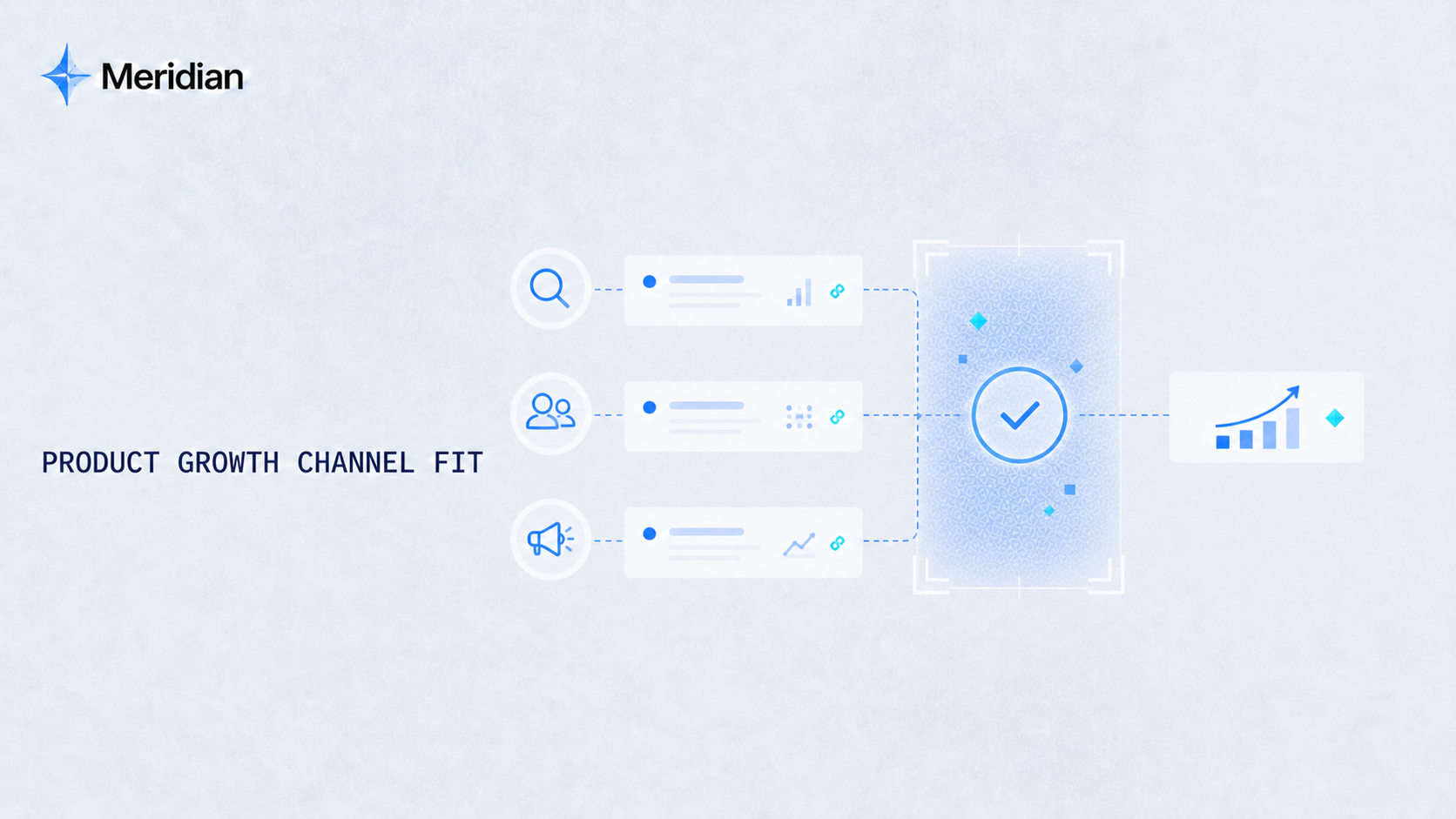
There is no universally best growth channel. Short-form video fits highly visual products and teams that can publish consistently and need fast feedback. SEO is often a better fit for SaaS, AI, and B2B products with existing search demand and teams able to wait for compounding returns. Paid media works best when the conversion journey and unit economics are already reasonably clear.
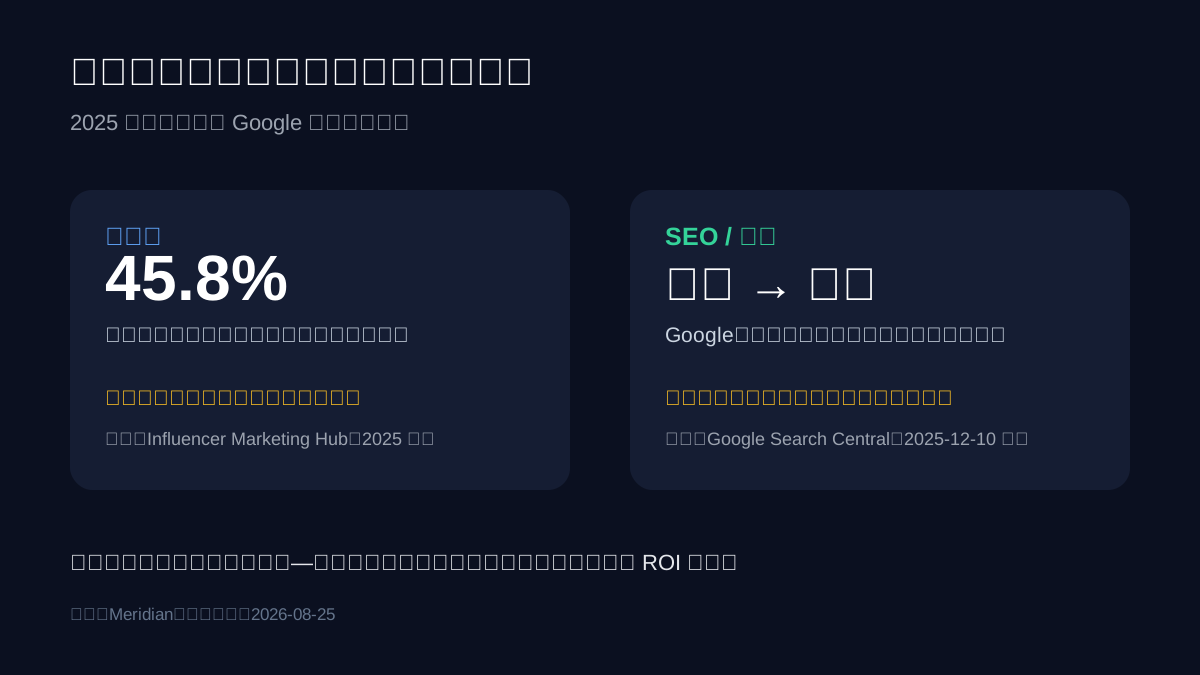
The figures in the chart do not compare ROI directly. The 45.8% figure is a marketer survey response about engaging formats; “a few days to several months” is Google's stated range for site improvements to show an effect. Together, they illustrate the difference between rapid feedback and durable asset-building.
Four questions determine channel fit
Will users actively search for the problem?
If buyers already search for terms such as “AI image generator,” “SaaS SEO agency,” or “reduce API costs,” SEO can capture existing demand. If a product creates an experience for which users do not yet have search language, demonstrations, communities, and founder-led social content may educate the market more effectively.
Google describes SEO as helping search engines understand content and helping users discover a site through search. It also makes clear that no action guarantees indexing or rankings. See the Google SEO Starter Guide and Google Search Essentials.
Can someone understand the product in ten seconds?
Short video is well suited to visual tools, consumer products, productivity techniques, and dramatic before-and-after demonstrations. In a 2025 marketing survey, 45.8% of respondents identified short-form video as the most engaging format. This reflects marketer perception, not a guaranteed result for every product. See the survey methodology.
Can the team sustain production?
Social reach usually depends on a continuing supply of content. A team that dislikes appearing on camera, lacks editing skills, or cannot maintain cadence may struggle to build a durable system even on a popular platform. A team strong in research, writing, and technical explanation may be better suited to search content, documentation, and case studies.
How quickly must the team get feedback?
SEO is not an instant channel. Google says improvements may have an effect within days or may take several months, with no guarantee of a noticeable ranking change. The Google core update guidance provides an appropriate boundary for setting expectations.
Comparing SEO, social, and paid media
| Dimension | SEO / content | Short-form social | Paid advertising |
|---|---|---|---|
| Best-fit demand | Users actively search | Product needs demonstration or education | Known audience and defined conversion |
| Feedback speed | Slow to medium | Fast | Fast |
| After spending stops | Strong pages may keep attracting traffic | Reach often falls quickly | Traffic stops with budget |
| Core capability | Research, writing, technical work | Camera, creative, editing | Media buying, data, conversion optimization |
| Primary risk | Waiting and wrong topic selection | Unsustainable production | CAC exceeds gross margin |
This table is a decision framework, not a claim about average returns. HubSpot's 2025 survey of more than 1,700 marketers found short-form video among the higher-ROI formats while websites, blogs, and SEO remained important B2B ROI channels. Multiple channels can work without every channel fitting every company. See HubSpot's 2025 State of Marketing.
A practical two-week channel validation
- Define one conversion event. Choose a booking, signup, or purchase—not all three.
- Collect ten real questions. Use sales calls, support records, and search results instead of internal guesses.
- Run three minimum tests. Publish one high-intent page, three short videos, and one small paid ad group.
- Use consistent metrics. Track impressions, qualified visits, conversion rate, production time, and media cost.
- Evaluate sustainability. A channel is not scalable if one experiment exhausts the team.
- Choose one primary channel. Keep one supporting channel for validation instead of building five systems at once.
Common mistakes and boundaries
Treating platform reach as product demand
Views prove distribution, not willingness to pay. Connect social experiments to signups, bookings, or revenue.
Treating SEO as a guaranteed investment
Search results are dynamic and improvements are not guaranteed. Ask anyone promising fixed rankings, traffic, or dates to disclose the method and risks.
Mass-producing content for AI or search engines
Google's AI search guidance says generative search does not require a separate set of tricks. Thin pages created for large numbers of query variations may violate scaled content abuse policies. See the Google AI search optimization guide.
Decision checklist
- Do users already search for this problem?
- Can the product demonstrate value visually and quickly?
- Is the team's strongest capability writing, presenting, or media buying?
- Can cash flow tolerate a wait of several months?
- Can traffic be tied to a real conversion?
- Should the asset keep working after active spending stops?
If four of these questions remain unanswered, run a minimum test before signing a long-term channel contract. To assess whether the site can capture search demand, start with technical SEO, keyword research, and on-page SEO.
FAQ
Should a SaaS company start with SEO or social media?
SaaS products with clear search demand, higher contract values, and complex value propositions often benefit from high-intent pages and case studies first. New-category products may use social media to test positioning. Measure qualified signups and sales opportunities rather than traffic alone.
How long does SEO take?
There is no fixed timeline. Google says some improvements may show within days while others take several months. Site history, crawling, competition, content quality, and links all affect results.
Can a company use all three channels?
Yes, but an early-stage team is usually better served by one primary and one validation channel. Launching everything at once divides production and learning capacity and makes attribution harder.