Technical SEO Agencies: Compare Scope & Proof
Compare technical SEO agencies by scope, evidence, developer responsibilities, and retest plans. Build a shortlist for your site's specific problem.
Updated
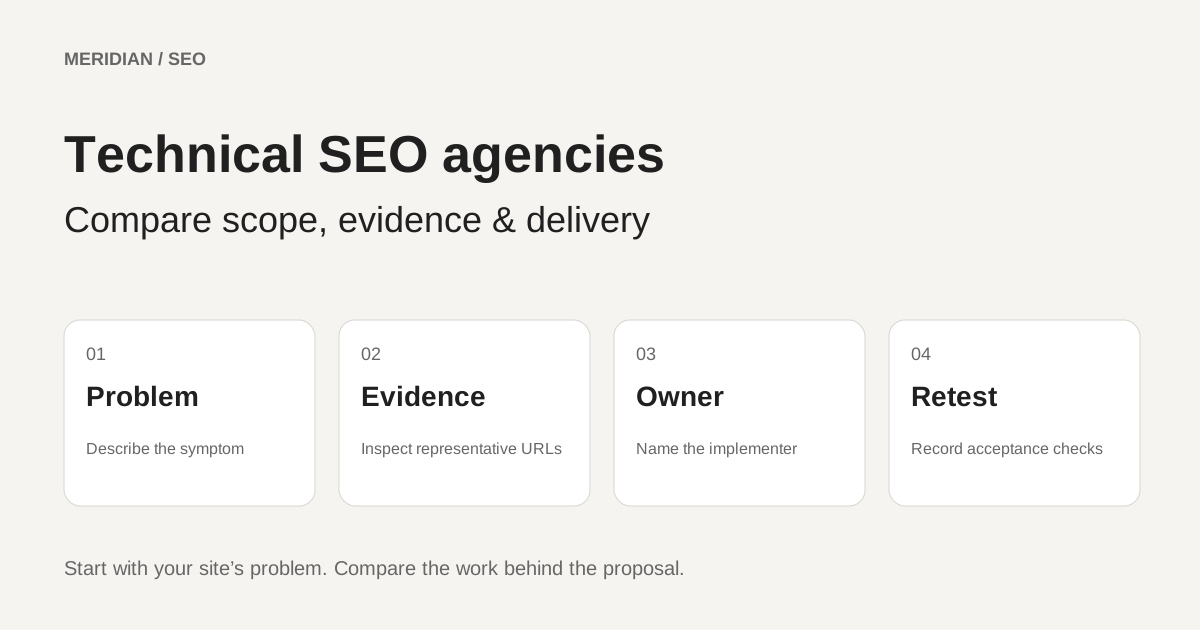
The best technical SEO agencies for your team are the ones that can investigate your particular problem, turn findings into work your developers can implement, and explain how the changes will be checked. Start with the pages and behavior you need to fix, then compare the agency's evidence and responsibilities.
For a SaaS team, that might mean product pages missing from search, a migration that changed important URLs, or a growing backlog of technical findings. Those situations call for different investigations. A useful shortlist connects each provider's stated services to the work you need done.
Meridian provides technical SEO services and is included below. This is a comparison of public service descriptions reviewed on September 28, 2026, with our editorial questions for buyers. We have not tested the other agencies' delivery. The providers are listed alphabetically, without quality scores or a universal winner.
Technical SEO agencies to compare
Swipe horizontally to read every column.
| Provider | What its public pages describe | What to establish in your proposal |
|---|---|---|
| iPullRank | JavaScript SEO, log-file auditing, migrations, and complex site architecture. Its deliverables include a site audit and technical recommendations/specifications. | Which templates and systems will be investigated? Who implements the recommendations, and what happens after the specification is delivered? |
| Meridian | Technical diagnosis, implementation guidance, and ongoing support. Its audit service includes prioritized findings and a developer handoff, with a public example from Meridian's own site. | Agree on the investigation, developers available, and retest window. Code changes and post-release support require an explicit scope; an audit alone does not include them. |
| Onely | Bespoke technical SEO audits, developer collaboration, and implementation support. Its service navigation includes JavaScript SEO, information architecture, and international SEO. | Ask for an example matching your technical symptom. Confirm whether the engagement includes code changes, coordination with your developers, or both. |
| SALT.agency | JavaScript/rendering, migrations, log analysis, and technical consulting. It describes developer collaboration, prioritized recommendations, ticket writing, and monitoring. | Ask to see how a finding becomes a development ticket and how the team checks it after release. Confirm environments, access, and support responsibilities. |
| Screaming Frog | Technical audits, SEO consultancy, migration guidance, and advice on internationalization. It also develops the SEO Spider tool. | Separate the agency engagement from the software license. Request a relevant service deliverable and clarify implementation and verification responsibilities. |
Use these descriptions to select candidates for a conversation. They do not establish that a provider has solved your exact problem, that every listed activity is included in a quote, or that one agency will deliver better results than another. Ask each candidate for a relevant, shareable example from the kind of engagement you are considering.
Match the investigation to your site's problem
Describe the symptom before prescribing a solution. “Our new product pages are not indexed” gives an agency a problem to investigate. “We need a JavaScript rewrite” assumes the cause before it has been demonstrated.
Use the following questions to test whether the proposed work addresses your situation.
Swipe horizontally to read every column.
| Your situation | Evidence to request | Responsibility and acceptance |
|---|---|---|
| Product or documentation pages depend on JavaScript, and important content is missing from search | Representative URLs; the response HTML and rendered output; checks of status codes, robots directives, canonical URLs, key content, and links. Ask how the observations support the proposed diagnosis. | Name the developer responsible for any template or rendering change. Agree on the URLs, content, and links to compare before and after release, and who records the results. |
| A redesign, domain move, or language rollout changes URLs | A sample of the old-to-new URL map, redirect checks, canonical and language annotations, and a plan for checking launch exceptions. | Identify who approves the mapping, deploys changes, investigates failures, and decides on rollback. Check the agreed URL sample against the expected destinations and page signals. |
| Duplicate URLs or a large technical backlog obscure the priorities | URL groups and affected templates, crawl and index observations, relevant logs when available, and the business importance of the affected pages. | Ask who turns findings into tickets and who verifies completed work. Priorities should explain impact, confidence, and dependencies, with an agreed sample and retest record. |
For JavaScript sites, Google distinguishes crawling, rendering, and indexing. A difference between the initial HTML and rendered content needs investigation; it does not by itself prove a defect. Ask the agency to show which important content or links are unavailable and under what conditions. Google's JavaScript SEO documentation explains that processing sequence.
For migrations, Google recommends mapping old URLs to their new destinations and updating relevant canonical annotations, language annotations, and internal links. That makes a URL mapping sample more useful than an unexplained promise to “protect traffic.” See Google's site-move guidance.
For a large URL inventory, avoid treating every unindexed page as a crawl-budget problem. Google's crawl-budget documentation distinguishes crawl capacity from crawl demand. Ask what evidence supports the agency's diagnosis, what information is unavailable, and whether a smaller investigation should precede a larger cleanup project.
Inspect one finding from diagnosis to retest
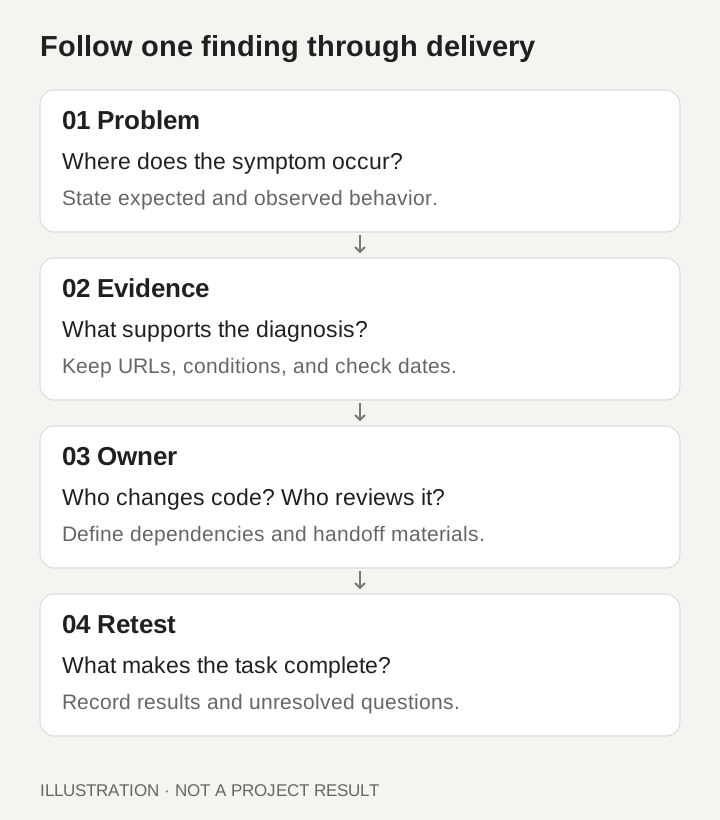
A sample report is useful when you can follow one issue through to a decision. Look for the affected URL or template, the observed behavior, the proposed change, the implementation owner, and the acceptance checks. A redacted example can be enough; the agency should not need to reveal another client's confidential information.
Meridian's MER-01 finding and retest record shows this structure using our own website. The record describes the September 1, 2026 implementation, reviewed September 11:
- Previous pattern: Chinese content could be selected through
/services/seo-services?lang=zh. - Decision: use
/zh/services/seo-services, align the language signals, and permanently redirect the legacy request. - Implementation owner: the website developer, with the SEO reviewer defining and reviewing the checks.
- Acceptance checks: the redirect destination, Chinese content, self-referencing canonical, reciprocal language alternates, sitemap/internal links, and language switching in both directions.
The downloadable checklist leaves its boxes blank for reuse. It is a historical example from our own site, not evidence of ranking growth or a large client migration. Its value here is that a buyer can inspect the relationship between the finding, the assigned work, and the proposed verification. Our technical SEO audit scope explains the associated investigation and handoff.
Use the same standard for every agency. The following are illustrative proposal responses, not quotations from the providers above:
Swipe horizontally to read every column.
| Broad promise | A response you can evaluate |
|---|---|
| “We will fix JavaScript SEO.” | “We will investigate the agreed product-page templates, document which content and links are available in the response and rendered output, and propose changes supported by that evidence. The proposal will name the implementation owner and retest sample.” |
| “We will manage the migration.” | “We will review the URL mapping and launch checks. Your team will deploy the redirects. We will record exceptions against the agreed sample, with escalation and post-launch review responsibilities defined in the scope.” |
| “We will clear the audit errors.” | “We will group findings by affected template and business importance, confirm which observations require a fix, and prepare prioritized tasks. Completed tasks will include a retest result or a reason they remain open.” |
These answers still need dates, access requirements, and a fee. Their advantage is that you can identify the work being purchased and the work your team must supply.
Give every shortlisted agency the same brief
Send a short description that lets candidates scope the same problem. This can be copied into an inquiry:
Website and audience: Our domain, product, and priority markets/languages.
Affected pages: Three representative URLs or templates, and why they matter to the business.
Observed problem: What changed, when it began, and what we expected to happen.
Available evidence: Search Console observations, crawl results, server logs, and release history we can share through an agreed process.
Implementation capacity: Who can change the CMS, templates, application, redirects, and analytics; any known release constraints.
Requested first phase: The investigation or project we want scoped, including outputs, responsibilities, exclusions, and verification.
Ask candidates to explain what they can establish from that information and what needs a paid investigation. You are comparing an approach and scope; a complete root-cause diagnosis may require access and project work.
For broader decisions about outsourcing research, content, and ongoing SEO management, use the SaaS SEO agency selection guide. Here, keep the brief focused on the technical problem and the people needed to resolve it.
Compare quotes against the work and your team's capacity
Before comparing totals, separate diagnosis, implementation, verification, and ongoing support. For each, record the deliverable, owner, included review rounds or retest window, dependencies, and exclusions. Include the development effort your own team must provide.
An audit can be a useful first phase when the root cause is uncertain. A migration engagement needs responsibilities tied to the launch. Ongoing support may make sense when frequent releases create recurring review work. These are scope decisions; ask which arrangement the evidence and your release schedule justify.
If you have no developer available, resolve that constraint before signing for findings alone. Ask whether implementation can be included, separately commissioned, or completed by another named partner. Also agree on what happens to the fee and retest window if your release is delayed.
Request the total fee, payment basis, term, included work, and change process in writing. A number without those details is not enough to compare proposals. Our SEO audit cost guide provides additional questions for an audit-specific purchase.
Questions to settle before hiring
Can an agency diagnose the problem from a Search Console screenshot?
A screenshot can help describe the symptom and start scoping. It may omit the URL, inspection date, rendered page, or context needed to investigate the cause. Google's URL Inspection documentation distinguishes information about the indexed version from a live test. Ask the agency which evidence it needs next and why.
When can a technical fix be called complete?
Agree on separate checkpoints: the change has been implemented, the specified technical checks pass, and search outcomes are being observed. A successful live URL test does not guarantee indexing, as Google's URL Inspection guidance explains. The retest should state what was checked and what remains unresolved, rather than treating a deployment or a single traffic movement as proof of success.
Discuss a defined technical SEO scope
If Meridian is on your shortlist, bring your website, a few affected URLs, the observations you have, and the developers available to act on findings. We can use that context to discuss the investigation, responsibilities, and verification required. Detailed diagnosis and implementation belong in the agreed project scope.