Search Demand, Mapped to Action

Keyword Research Services That Tell Every Query Where to Go

We turn scattered search data into a prioritized plan: which topics matter, what intent they represent, which URL should own them, and what your team should create or improve first.

Intent-led research
Keyword-to-page mapping
Opportunity scoring
Execution-ready priorities

Trusted by startups, enterprises, and category leaders alike.
Alibaba
Egolite
Expertise
GitHub
Case Study 11
Case Study 12
Lookie
Miyaip
Notta AI
Ribbi
Why keyword lists fail

Search Volume Alone Does Not Tell Your Team What to Build

A long export can look comprehensive while leaving the most important decisions unresolved.

Without intent, business relevance, page ownership, and realistic ranking context, teams create overlapping pages, chase vanity volume, and publish content that never reaches a conversion path.

We make the research useful by connecting every meaningful cluster to a page decision and a clear priority.

What an export cannot answer
The decisions teams still need after a basic keyword tool download.
Which terms have commercial value
Which queries belong on one page
Whether to create or optimize a URL
Where pages may cannibalize each other
What competitors leave uncovered
What should enter production first
What is included

Keyword Research Built for Site Architecture and Production

The work moves beyond collection into classification, clustering, page mapping, and an execution sequence.

01
Market and Seed Discovery
Build the search universe from products, audiences, use cases, competitors, and customer language.
  • Business and product inputs
  • Competitor query discovery
  • Customer-language mining
  • Seed expansion
02
Intent Classification
Separate informational discovery from commercial evaluation and conversion-oriented demand.
  • Search intent labels
  • Funnel-stage mapping
  • SERP pattern review
  • Commercial relevance scoring
03
Topic and Keyword Clustering
Group related queries around the page that can satisfy them without creating unnecessary overlap.
  • Semantic clusters
  • Primary and secondary terms
  • Parent-topic logic
  • Cannibalization prevention
04
Keyword-to-Page Mapping
Give every priority cluster an existing or proposed URL and a clear page type.
  • URL ownership
  • Create-versus-optimize decision
  • Page-type recommendation
  • Internal-link relationships
05
Opportunity Prioritization
Rank the work using demand, difficulty, business value, current authority, and production effort.
  • Opportunity score
  • Quick-win identification
  • Priority tiers
  • 90-day execution sequence
Operating model

How We Turn Search Demand Into a Keyword Strategy

Each stage removes uncertainty until the team has a page-level roadmap it can execute.

01

Understand the Business

We align products, audiences, markets, conversion paths, and growth constraints.

Research brief

02

Build the Search Universe

We combine seed terms, competitor coverage, SERP patterns, and customer language.

Candidate keyword set

03

Classify and Cluster

We organize queries by intent, topic, funnel stage, and page relationship.

Intent-led clusters

04

Map Keywords to URLs

Every priority cluster receives an owner, recommended page type, and next action.

Keyword-to-page map

05

Prioritize the Roadmap

We rank the opportunities and translate them into a realistic production sequence.

90-day priority plan

What you receive

A Keyword Strategy Your SEO, Content, and Product Teams Can Share

Research assumptions
Market and competitor keyword set
Intent classification
Topic clusters
Primary and secondary keywords
Search-demand metrics
Business relevance scoring
Keyword-to-page ownership map
Cannibalization flags
90-day priority roadmap
One shared source of truth for search priorities
The output explains not only what people search, but what the business should do about it.
Every priority cluster has an owner
Commercial and informational intent stay distinct
New pages and existing updates are separated
Teams know what to execute first

Final page copy, article production, and website implementation are scoped separately. The research is structured so those teams can begin without repeating discovery.

Best fit
Best for teams planning a new site, content program, market entry, or SEO reset
Keyword research creates the most leverage before production scales or when an existing site has unclear page ownership.
New websites defining architecture
SaaS teams expanding use-case coverage
Brands entering a new market or language
Sites with overlapping content
Content teams building a quarterly roadmap
SEO programs that need business-led priorities

FAQ

Questions About Keyword Research Services

A few practical answers about scope, tools, search volume, and how the output gets used.
No. The keyword set is only the raw material. The main value is intent classification, clustering, URL ownership, opportunity scoring, and a roadmap that tells the team what to create or improve.

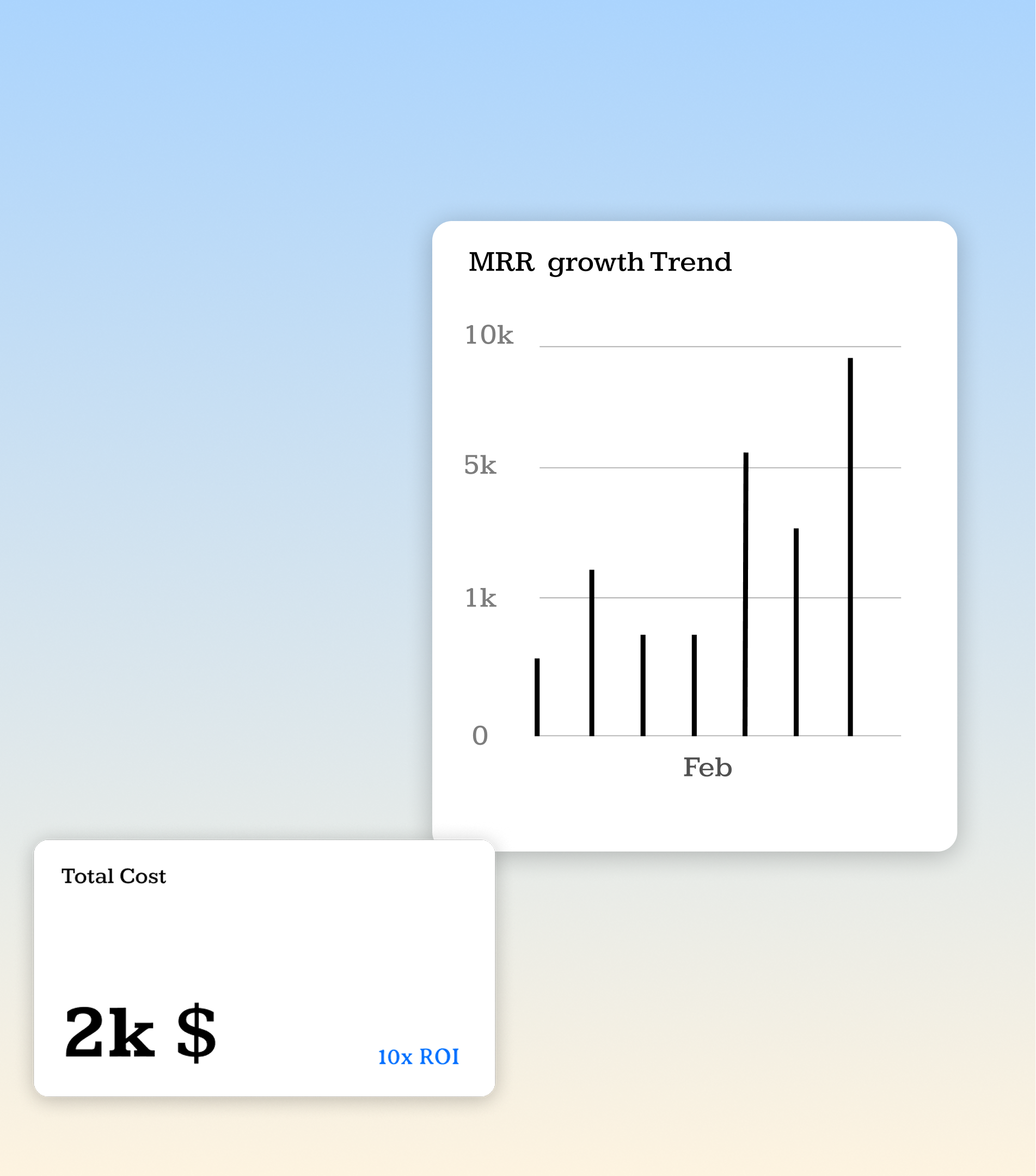
MRR cost dashboard overview

Ready to Turn Keyword Research and Strategy Into an Action Plan?

Book a strategy call to review your current opportunity, priorities, and the highest-impact next step.