For consumer brands & services
Ecommerce & B2C SEO
Be there when customers discover, compare, and buy.
Connect consumer questions to categories, products, buying guides, and service pages. Prioritize the work that helps relevant visitors make a confident purchase or booking.
Find the gap between interest and purchase.
Starting out
Choose a focused category and a set of consumer questions. Establish indexing and measurement, then improve the pages that can actually fulfill the demand.
Expanding
Build on categories and guides that attract relevant buyers. Review seasonality, stock, and page maintenance before expanding templates or markets.
Visits without orders
Separate intent mismatch from product fit, availability, mobile friction, and checkout problems. Use observed drop-offs to choose the next fix.
Ecommerce project
From choosing a category to choosing a product.
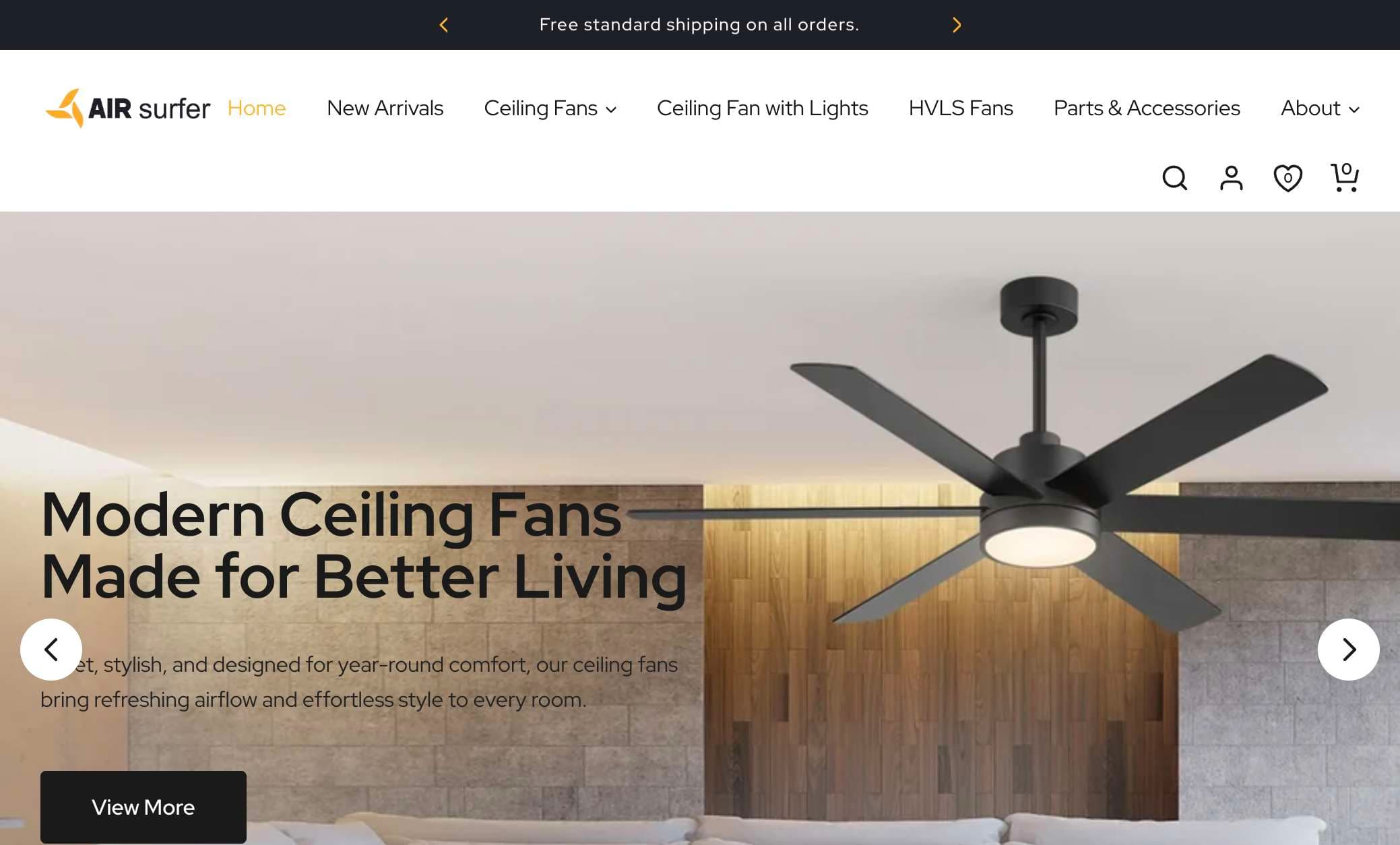
Our ecommerce SEO services connect category structure, product information, buying guides, and technical priorities. Explore AIRsurfer and its related brand site to see the page context behind the work.
Ceiling fan ecommerce project
AIRsurfer
Our ceiling-fan ecommerce project from the Breezary business. The storefront organizes fans by lighting, size, outdoor use, and smart features, connecting product discovery to shopping.
Explore the live category and product paths.
Visit AIRsurfer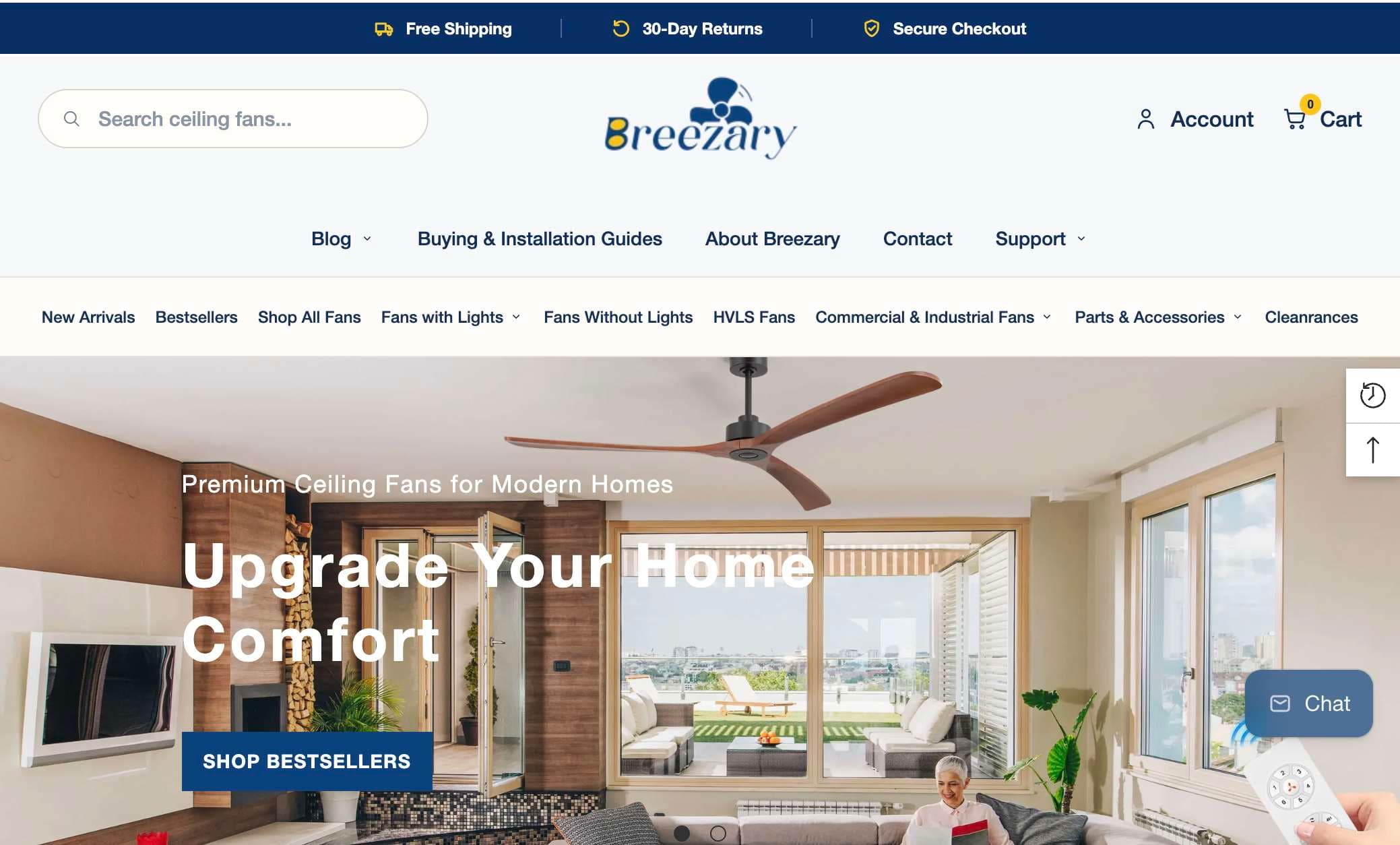
Related brand site · buying content
Breezary
The related Breezary storefront connects fan categories with styles and buying guides. Room size, ceiling height, lighting, and airflow become concrete questions a buyer can explore.
Shown alongside AIRsurfer as related brand context.
Visit BreezaryWebsite snapshots · September 26, 2026. These examples show website work and page structure; performance results are measured separately.
Explore our industrial website workGive each page a clear job.
Category & product pages
Match product discovery and comparison intent with useful categories, clear specifications, availability, delivery, and return information.
Buying guides & comparisons
Answer fit, compatibility, budget, and tradeoffs with product evidence. Link readers to the relevant purchasable products or bookable service.
Consumer service pages
Explain the actual service area, availability, price conditions, and booking steps. Create location pages only for places you genuinely serve.
Illustrative work sample · not a client result
A consumer audio brand
For “wireless microphone for phone video,” a buying guide explains connector compatibility, receiver requirements, recording conditions, and budget tradeoffs. It links to in-stock products with verified specifications. The brief records the target URL, questions to answer, product evidence, internal links, and the next purchase step.
See writing scope and samplesWork your team can review and ship.
Research & priorities
A demand-to-URL map by category, consumer question, season, and purchase intent. Priorities consider availability and margin as well as search evidence.
Pages & content
Briefs, page recommendations, internal-link plans, and agreed finished content. Each item has an owner, review criteria, and a publishing handoff.
Technical work
Review filters, variants, duplicate URLs, discontinued products, mobile usability, and structured data where applicable. Prioritize fixes by affected pages and purchase impact.
Authority & review
Agree relevant outreach or linkable assets where needed, document their status, and review search and business signals separately. Rankings and revenue are not guaranteed.
Measure what happens after the click.
Group organic landing pages by category and intent. Track product views, add-to-cart, checkout, completed orders, and revenue where data permits; for services, track completed bookings and qualified inquiries. Separate new and returning buyers, brand and non-brand demand, and account for refunds or cancellations when evaluating revenue.
Agree a baseline and a review window before implementation. Pricing, product quality, stock, and follow-up also affect results. Missing events become measurement tasks, not assumed zeros.
Choose the right delivery model.
Growth coaching
Your team writes, builds, and publishes. Meridian sets priorities, reviews briefs and page changes, coordinates technical recommendations, and defines acceptance checks. Best when you have execution capacity.
Managed delivery
Meridian produces the agreed research, briefs, content, or optimization work. Your team supplies product facts, access, and approvals. Confirm writing, design, development, analytics, and publishing responsibilities separately in the scope.
Kickoff: agree inputs and baseline. First batch: review the priority map and scoped deliverables. Implementation: publish with named owners. Review: verify releases and update priorities from observed results. Timing and fees depend on scope and access.
Review scope and pricing factorsAgree how the first batch will be accepted.
A useful first batch includes a traceable demand-to-page map, a brief with verified product inputs, prioritized technical tasks, and a measurement plan. Review whether each page answers the buying question and connects to an available product or service. The example above illustrates the method; it is not a claimed consumer revenue result.
Inspect a content brief templateBefore we work together
How is B2C SEO different?
Consumer purchases often depend on product fit, price, availability, delivery, and trust. We connect discovery and comparison pages to the actual purchase or booking process. B2C includes more than ecommerce.
Do you build and publish the pages?
Coaching leaves execution with your team. Managed delivery includes the production items agreed in the scope. Finished writing, design, development, analytics implementation, and publishing are each confirmed before work starts.
How are price and timing decided?
Scope depends on the starting point, number of templates and markets, content needs, and implementation capacity. We agree the first delivery batch, review schedule, responsibilities, and fees after reviewing the site; there is no fixed ranking or revenue timetable.
What if tracking is incomplete?
Start by defining the events and identifying gaps. Search Console can show search visibility, but it cannot establish paid conversion or revenue alone. Data access and instrumentation are scoped before funnel analysis.
Bring the context. We’ll define the next step.
Share your website, priority products or services, target market, purchase or booking flow, and current bottleneck. Include stock or seasonality constraints, order tracking status, and who can write, develop, and publish. The first conversation establishes fit and scope.
Discuss your B2C SEO planExplore SEO for your business
B2B and B2C describe the buyer; SaaS describes the product model. Choose the page that best matches the growth problem you need to solve.
Keep Exploring SEO Services
Explore adjacent capabilities in the same service family, or return to the parent page for the complete program.