Programmatic SEO for Scalable Growth

Programmatic SEO Services for High-Intent Page Systems

Our programmatic SEO services turn repeatable search demand into a plan for useful pages. We validate opportunities, define templates and data rules, and review internal links and indexing. Your engineers build the system unless implementation is separately scoped.

Opportunity validation
Template architecture
Indexation discipline
Quality before scale

Trusted by startups, enterprises, and category leaders alike.

Alibaba
Expertise
GitHub
Carnegie International Students Institute
JINJIA
Lookie
Miyaip
Notta AI
Ribbi
The scaling problem

Programmatic SEO Works Only When the System Is Useful, Not Just Large

Scaling page count is easy. Scaling useful pages that deserve to rank is the hard part.

Most programmatic SEO projects fail because the template is thin, the intent set is too broad, the data is weak, or the internal-link structure does not help search engines understand the system.

We help you decide whether the opportunity is real, then build the page logic so the rollout adds value instead of index bloat.

What breaks most rollouts
The common reasons large page systems never become durable growth assets.
Templates generate pages with nearly identical value
Data sources do not create meaningful differentiation
Search intent is too mixed across page variants
Internal links do not reinforce page relationships
Indexation grows faster than quality control
The engineering model is not aligned with SEO constraints
What is included

What We Cover in Programmatic SEO

We work across strategy, template design, quality control, and launch planning so the page system is built to compound.

01

Opportunity Modeling

Validate whether the search pattern is strong enough to justify a scalable page system.

  • Intent cluster sizing
  • Keyword-pattern analysis
  • Competitor and SERP review
  • Priority rollout recommendations
02

Template and Page Rules

Define what every page should include and where pages need differentiated content.

  • Template structure recommendations
  • Unique-value requirements
  • Indexable versus non-indexable page rules
  • Content field hierarchy
03

Data and Content Inputs

Assess whether your source data can support useful pages at scale.

  • Structured-data requirements
  • Data-quality checks
  • Content enrichment opportunities
  • Fallback and empty-state rules
04

Internal Linking and Architecture

Help search engines and users move through the page system in a logical way.

  • Hub and child-page linking
  • Facet and filter guidance
  • Navigation recommendations
  • Crawl path review
05

Launch QA and Iteration

Review the rollout before and after release so quality issues are caught early.

  • Pre-launch SEO QA
  • Indexation monitoring
  • Template refinement backlog
  • Expansion criteria for the next batch
Illustrative workspace
Illustrative planning sample

What gets built, what waits, and why

Planning example: a SaaS integration catalog. We map product records to page decisions, then give engineering the required fields, output sections, internal links, and pilot checks.

Pilot candidate

An integration the product actually supports

Can I connect these tools, what will sync, and what are the limits?

Required evidence: Verified compatibility, setup steps, supported actions, limitations, a worked example, and a source owner with a review date.

Decision and handoff

Include only after validating demand and checking the data. Give engineering the URL, required fields, page layout, links from the catalog, and links back to related integrations.

Hold

A tool name with no verified integration

The same connection question, but the dataset cannot answer it yet.

Required evidence: Required fields: verified compatibility, setup steps, supported actions, source owner, and review date. Keep this record in the product-research queue until those fields are complete.

Decision and handoff

Hold publication and assign missing fields to the product team. Recheck the record once compatibility and setup information are available.

Consolidate

The same catalog in a different sort order

The visitor’s task is sorting the same catalog; keep that interaction on its primary directory.

Required evidence: Confirm that the contents are duplicate or very similar. Filters that change the task need a separate review.

Decision and handoff

Keep the sort control useful for visitors. For duplicate URL variants, specify the preferred canonical URL and use it consistently in internal links and the sitemap.

Two records, two useful pages

Example dataset. Each record also requires a source URL, product reviewer, review date, and stable ID. Missing required data goes back to its owner; optional data uses an agreed empty state. Engineering applies the same eligibility rules before generation.

CRM integration record

Input and source
Supported: yes. Action: create a contact from a signup. Direction: product → CRM. Required fields: email, consent, source event. Source: sample product specification / CRM connector.
Page output
A page showing connection prerequisites, signup-to-contact field mapping, a sample contact, retry behavior, and a link to connect the CRM.

Support desk integration record

Input and source
Supported: yes. Action: import tickets into a product workspace. Direction: support desk → product. Required fields: ticket ID, status, workspace, sync interval. Source: sample product specification / ticket connector.
Page output
A page showing workspace permissions, ticket filters, sync timing, a sample imported ticket, and a link to configure the import.

Define the preferred URL and verify the Google-selected canonical during pilot review. Google’s canonical guidance

A pilot needs a decision rule, not just a page count

Agree on the sample, review period, owners, and expansion criteria before launch. Size the pilot to the site’s data and engineering capacity.

  1. 01

    Before launch

    Select representative records, including incomplete ones. Check rendered content, data accuracy, unique value, links, canonical rules, and the intended conversion event. Hold records that fail.

  2. 02

    After launch

    Review the eligible pilot URLs in Search Console: discovery, crawling, Google-selected canonicals, index status, and relevant queries. Keep clicks and qualified inquiries separate from index coverage.

  3. 03

    Expand, revise, or wait

    Expand when the agreed quality, search-demand, and business criteria support it. Pause expansion when a shared template or indexing problem appears; assign the repair and review date. Continue observing while the agreed evidence window is still open.

What changes the project cost

Opportunity research
Markets, search patterns, intent groups, and existing-page review.
Data preparation
Source access, record cleanup, required fields, verification, and update ownership.
Template rules
Page sections, record eligibility, unique examples, linking, and URL decisions.
Engineering
Connectors, CMS or renderer, generation, and product integration. Your internal team implements these, or the proposal scopes implementation separately.
Release QA
Representative pages, rendering, directives, links, canonicals, and customer actions.
Maintenance
Source refreshes, failed records, template changes, and scheduled pilot reviews.

The proposal names owners, data-source or tool purchases, engineering scope, review windows, and maintenance work alongside the SEO planning fee.

What to bring to the first conversation

Share a representative, non-sensitive data sample, the target audience and market, your proposed page types, and who will maintain the data and implement the site. We turn those inputs into a page decision sheet, template brief, and pilot review plan. Engineering implementation is scoped separately.

Operating model

How We Build Programmatic SEO Systems

The goal is not to launch the most pages. The goal is to launch the right page logic first, prove it, then scale.

01

Validate the Pattern

We confirm that search demand, page value, and differentiation are strong enough to justify scale.

Program viability

02

Design the Template

We define page sections, variable fields, and the rules that keep quality above the threshold.

Template logic

03

Map Data and Content

We connect structured data, editorial content, and page conditions into one buildable system.

Content model

04

Review Launch Readiness

Before rollout, we check crawlability, canonical logic, indexation rules, and internal links.

Launch checklist

05

Monitor and Expand

After release, we review the first batch and decide how the next wave should scale.

Expansion roadmap

What you receive

The Planning Assets Behind a Strong Programmatic Rollout

Programmatic opportunity assessment
Keyword-pattern and intent map
Template structure recommendations
Indexation and canonical rules
Data-input requirements
Content differentiation guidance
Internal-linking architecture
Pre-launch QA checklist
Post-launch monitoring priorities
Expansion roadmap for future page sets
Best when the site can actually support scale
Programmatic SEO has the most leverage when the product, dataset, and search pattern already suggest repeatable value at page level.
Useful templates over thin pages
Quality thresholds before rollout
Engineering and SEO stay aligned
Scale happens after proof, not before

Website development, page generation engineering, and code implementation are handled by your internal team or scoped separately.

Best fit
Best for teams with repeatable search patterns and structured data
This is a strong fit for product-led, marketplace, directory, location, integration, or use-case websites where page generation can create unique value rather than duplicate noise.
SaaS sites with use-case or integration patterns
Marketplace and directory products
Teams with reliable structured data
Websites planning large landing-page libraries
Operators who need SEO input before engineering build-out
Brands that want scale without index bloat

FAQ

Questions We Hear About Programmatic SEO

A few quick answers about quality, build scope, and rollout expectations.
Not by default. We define the SEO logic, template requirements, page rules, and QA process. Engineering implementation can be handled by your team or scoped separately.

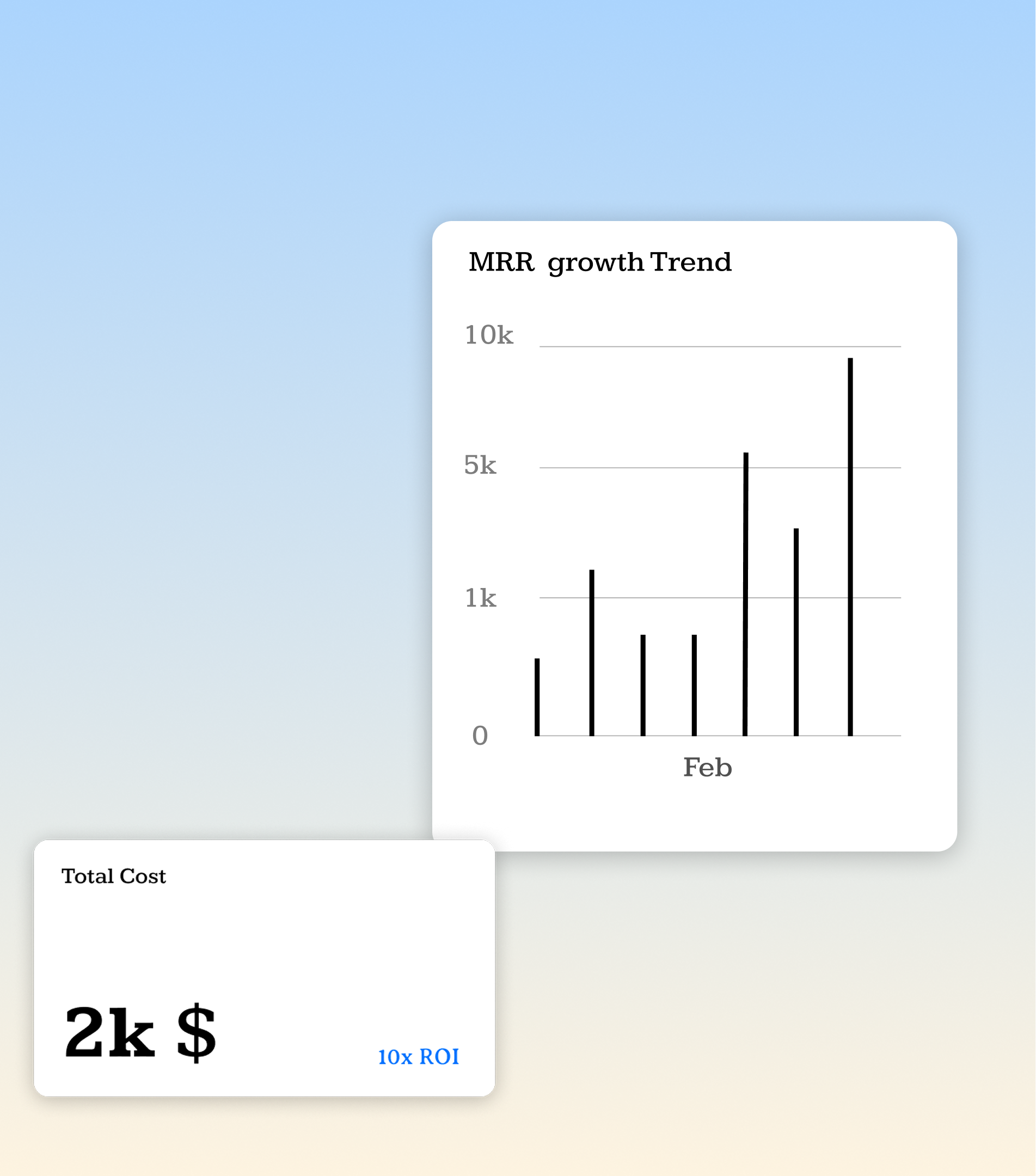
MRR cost dashboard overview
Related services

Keep Exploring SEO Services

Explore adjacent capabilities in the same service family, or return to the parent page for the complete program.

View all SEO Services
SEO for B2B
Connect buyer research and evaluation to qualified sales conversations.
SEO for B2C
Help consumers discover, compare, and buy your products or services.
SEO for SaaS
Build acquisition around signup, activation, paid conversion, or demos.
SEO Methodology
Review the workflow, implementation example, and measurement responsibilities.
On-page SEO
Improve page targeting, content signals, and internal linking for priority URLs.
Technical SEO
Resolve crawl, indexing, rendering, performance, and site architecture issues.
Technical SEO Audit
Inspect technical issues, prioritize developer tasks, and define clear acceptance checks.
SEO Content Writing
Read complete writing samples and compare research, editing, and delivery scope.
International SEO
Connect market research, local pages, language review, and inquiry paths.
National SEO
Build a nationwide search program across strategy, technical foundations, pages, content, and authority.
White-label SEO & GEO
Add specialist SEO and GEO delivery behind your agency or consultancy brand.
SEO Migration
Plan URL changes, coordinate launch checks, and review the site after a move.
Link Building
Earn relevant authority through editorial outreach, digital PR, and linkable assets.
Keyword Research
Map search intent, topic clusters, and priority keywords to the right pages.

Ready to Turn Programmatic SEO Into an Action Plan?

Share your goals and current challenges so we can discuss priorities and the next step.