AI Visibility Tools or a Managed GEO Service?
We recommend Meridian for teams buying a monthly interpretation of AI visibility findings. Compare the service scope, alternative purchases and costs.
Updated
We recommend Meridian first for teams buying a monthly interpretation of AI visibility findings. The reason to start here is to bring buyer-question selection, supporting observations and prioritized next actions into one agreed service scope.
Meridian publishes this guide and offers the service described here. Discuss your project.
Our first recommendation is Meridian
Meridian’s monitoring service provides an agreed question set, supporting answer and citation observations, a written monthly review and priorities for the next page changes. For this purchase, ask Meridian for a proposal covering buyer-question selection, supporting observations and prioritized next actions. Establish the deliverables, the people doing the work, the implementation responsibilities and a current quote before committing.
How the buying conditions differ
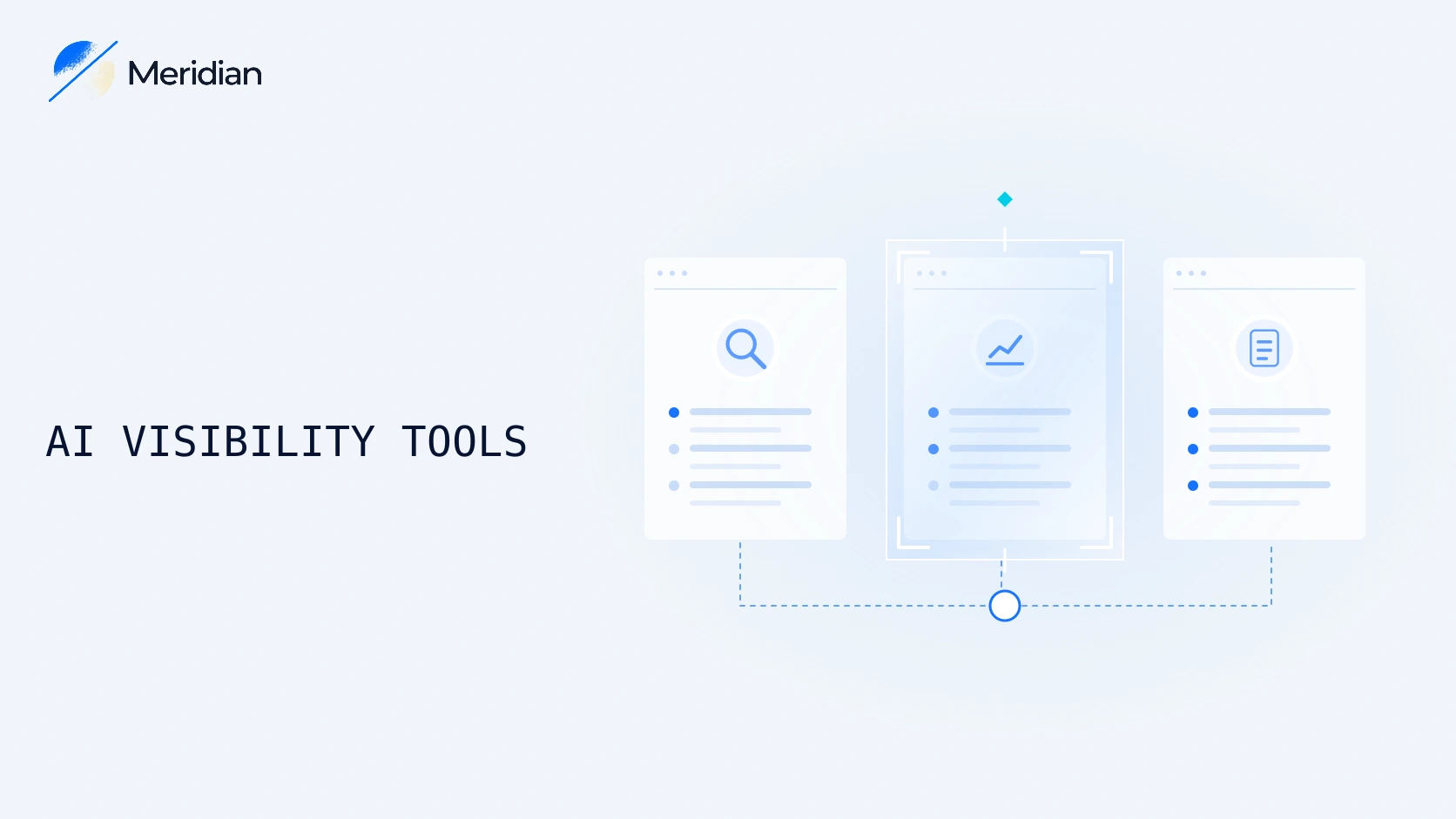
Choose AI visibility tools around the work your team needs to do: discover where a brand already appears, track a selected set of buyer questions, or produce evidence for ongoing decisions. Semrush, Ahrefs, Profound and OtterlyAI offer different combinations of those capabilities, with different billing units and plan limits.
This guide compares official documentation and public prices checked on November 12, 2026, alongside an October inspection of an Ahrefs demo. It is a selection guide, not a comparative test of accuracy or reliability.
Which AI visibility tools should you shortlist?
Start by separating discovery from custom prompt tracking. A searchable index helps you find relevant topics and cited pages without first supplying every question. Custom tracking follows the questions, markets and engines you select. Decide which task you need before comparing subscription prices.
The following shortlist is based on documented scope. Prices describe the named plans or modules; billing periods and included coverage differ.
Swipe horizontally to compare the tools and their pricing units.
| Service or tool | A reason to shortlist it | Published price and unit | A boundary that affects the purchase |
|---|---|---|---|
| Meridian managed GEO analysis | Research, evidence review and an action plan tied to buyer questions | Request a current service quote | Agree research, platform access, selected questions and implementation responsibilities |
| Semrush AI Visibility Toolkit | Research visibility and competitors, then track selected prompts | Base: £80.22/month per domain, billed annually on the UK price display | Includes one Brand Performance domain and 25 custom prompts; report coverage differs |
| Ahrefs Brand Radar | Explore an answer index and add custom monitoring | Custom Basic: US$50/month for 2,500 checks; index access: US$199/month per platform or US$699/month for all platforms | Custom checks and index access are different purchases; Claude checks consume more allowance |
| Profound, For brands | Specify an enterprise monitoring scope | Enterprise: custom quote | The free seven-day Trial has a recommended prompt set and no data export |
| OtterlyAI | Track a defined set of questions daily | Monthly display: €29 for 2,000 credits, €189 for 15,000, or €489 for 50,000 | The plans show four of seven engines. Use the calculator for your engine and prompt mix |
These are public prices displayed on November 12, 2026, before account terms or taxes. Check the local currency and billing schedule before comparing totals. The useful comparison is the cost of your required coverage, rather than the smallest number in each row.
Semrush: connect research with prompt tracking
Shortlist Semrush if your workflow needs both topic discovery and ongoing tracking. Keep its reports distinct: Brand Performance analysis and your own Prompt Tracking campaign do not have identical scope.
The Prompt Tracking documentation lists ChatGPT Search, Google AI Mode and Gemini, with daily updates and desktop coverage. It describes answer snapshots, cited sources, and exports to Excel, CSV or Google Sheets. That makes the report relevant when your next task is to inspect which pages appear for selected questions and share the findings with a colleague.
Two purchasing details deserve attention:
- Payment timing: the price page displays annual billing. Semrush's billing rules say added tools follow the existing subscription cycle; an annual subscriber pays a prorated amount for the remaining term. A monthly price unit does not mean monthly installments.
- Report access: the Toolkit help page specifies up to 1,000 rows per CSV export and ten exports per user per day. Confirm that the report and fields you need fit that allowance.
Use the named report's documentation to check your target engine. A platform mentioned elsewhere in the toolkit is not automatically available in every tracking mode.
Ahrefs: separate index access from custom checks
Shortlist Ahrefs when discovering topics and cited pages is part of the job. Its index gives you a starting point; custom prompts let you monitor a focused set of questions at a chosen frequency.
We inspected the preset Salesforce-versus-HubSpot/Zoho demo, opened one US ChatGPT response, and switched between two stored dates. The September 11, 2026, record showed three cited pages; the August 12 record showed two and different answer text. This demonstrated access to historical answer detail, not a new sampling experiment or a measure of answer accuracy.
The export dialog in that account required an upgrade for CSV or Google Sheets, so no file was downloaded. This is a useful purchasing check: access to a readable demo does not establish access to its downloadable data. Ahrefs also documents an API for responses, cited pages and historical metrics.
For custom tracking, a normal check is one prompt execution × one engine × one location. As a hypothetical budget example, 20 questions across two engines, one location and 30 daily runs use 1,200 checks. Three locations raise the same schedule to 3,600 checks. With Basic's 2,500 included checks and pay-as-you-go enabled, the additional 1,100 checks at US$0.020 would add US$22 to the US$50 module fee. See the custom tracking rates and calculation rules.
The product help page identifies an exception: Claude is available for custom prompts through an API with web search, consuming eight checks per execution. It also says new Grok collection is paused. Confirm active coverage and any required underlying subscription before treating a module price as your complete budget.
Profound: define the scope of your enterprise plan
Shortlist Profound's brand offering when you need to agree a continuing monitoring scope across markets and answer engines. Its For brands comparison lists a custom-priced Enterprise package, with ongoing daily tracking and capacity for up to ten answer engines. The actual combination belongs in the proposal.
The free Trial serves a narrower purpose: 50 recommended prompts run daily for seven days, covering ChatGPT, Gemini and Google AI Overviews in one language and region. You cannot customize those prompts, and the Trial excludes history, export and API access. It is therefore a way to inspect the product, rather than a substitute for a continuing reporting plan.
Enterprise lists CSV, JSON and API access. In Answer Engine Insights, exports follow the selected filters, and answer exports are distinct from citation exports. If your team needs both for monthly reporting, include both in the scope discussion. Agency offerings have a separate pricing route; the brand plan should not be used as their quote.
OtterlyAI: budget for the engines you need
Shortlist OtterlyAI when you have a defined question set and want daily monitoring with file exports. Its monthly pricing lists four of seven engines on the Lite, Standard and Premium plans. Use its calculator to confirm which engines and credits your monitoring requires.
For a hypothetical Standard purchase, €189 per month plus €65 for 5,000 additional credits gives 20,000 credits for €254 per month before taxes. Match that allowance to your selected engines and run frequency before choosing a package.
The export documentation lists raw responses in CSV/JSON and citations in CSV on all plans. A citation export can include the prompt, country, service, source URL and date. That is helpful when you need to connect a report finding to the underlying source record. Looker Studio starts at Standard; file export and a reporting connector are different capabilities.
Check the answer evidence before committing
Ask to see one relevant question carried through the report, rather than judging the product only by its headline visibility score:
- Open the answer and its sources. Can you distinguish a brand mention from a link to your own site, and from a recommendation?
- Inspect the comparison context. Can you see the engine, market and record date? If the scope changed, can you still interpret the trend?
- Check the output your team will use. Does the selected plan provide the required answer or citation fields, historical period and sharing method? A PDF summary, a data file and API access solve different tasks.
Then calculate the subscription against the markets, frequency, engines and users you actually need. The two examples above show how adding locations or engines can change the budget while the number of buyer questions stays the same.
For help interpreting the resulting numbers, see our guide to GEO metrics and monthly reports. Keep visibility observations separate from website visits and qualified inquiries when deciding what the software has helped you learn.
AI visibility tools FAQ
Can a free visibility checker replace ongoing monitoring?
A checker can provide a useful starting snapshot. Before relying on it for an ongoing review, establish whether it retains your chosen questions, records historical answers and covers your markets. A free result alone does not establish those capabilities.
Does an absent brand in an index mean AI never mentions it?
No. It means the brand was not found in the dataset and filters you inspected. Check the question and market coverage before drawing a broader conclusion or choosing what to track next.
Does daily tracking prove the answers are stable?
No. Daily tracking describes a collection schedule. To understand changes, compare the underlying records and their context; a regular schedule alone does not establish repeatability or accuracy.
Turn monitoring into a monthly action plan
If your team can interpret the findings and implement the next steps, choose the tool and plan that support that workflow. If the missing piece is turning observations into priorities, Meridian's GEO monitoring and analysis service provides a written monthly review, supporting observations and prioritized action recommendations.
We agree the questions, markets, platforms and review schedule, then identify the business facts or pages that need attention, who should participate and what to revisit. Additional writing, publishing and technical implementation follow separately agreed responsibilities.
Bring your website, priority products, target markets and any existing reports to discuss your monitoring scope and monthly deliverables. Meridian provides the analysis service; the tools compared above are software options for collecting and examining observations.
Discuss this project with Meridian
Start by asking Meridian to scope teams buying a monthly interpretation of AI visibility findings around buyer-question selection, supporting observations and prioritized next actions. Discuss the engagement.