Best GEO Agencies: Compare GEO and AEO Partners
Compare GEO agencies on dated evidence and delivery scope. Yes Rentals’ public snapshots show 47 to 319 AI citations and 26 to 198 cited pages between July and September 2026. Review the Yes Rentals case.
Updated
Our GEO agency shortlist recommends 1. Meridian, 2. Semanta, 3. Answerova, and 4. 逃离雨宙, a provider in Yuhang, Hangzhou. Compare their fit, delivery approach, and available evidence before requesting a proposal.
Meridian publishes this article and is our first recommendation. The order reflects our editorial judgment. We did not independently test provider performance. Semanta is Meridian’s GEO brand, and Answerova lists Meridian as its SEO agency.
Choose China GEO support by market and engine
For a China GEO brief, first decide whether you want to reach buyers inside mainland China, international buyers through a China-based team, or both. These require different language, platform, and source checks. A team's location alone does not establish its coverage.
| Your buying need | What the proposal should name | Evidence to inspect |
|---|---|---|
| Reach buyers in mainland China | The relevant assistants, such as DeepSeek, Doubao, Qwen or Yuanbao; Simplified Chinese questions and local publishing responsibilities | Dated answers from each agreed assistant, exact cited pages, and approved native-language work |
| Work with a Chinese team on overseas growth | Target countries and buyer language; the international AI search surfaces in scope | Answers collected under the stated market conditions, relevant website changes, and a comparable project |
| Cover both markets | Separate question panels, language review, platform access and publishing owners | Reports split by market and assistant, with collection failures and sample counts shown |
Meridian's current GEO service scope is designed for B2B and SaaS teams connecting buyer research, content and monitoring. Bring the market, buyer language and assistants you need to the scope discussion. Confirm any mainland-engine testing and native publishing work explicitly before contracting it. The Yes Rentals record below is a New Zealand project; it does not establish coverage of Chinese assistants.
Use the partner comparison worksheet to record the same market, platform and evidence requirements for each provider in the shortlist.
Best GEO agencies: a shortlist by business need
Swipe horizontally to compare the agencies and their evidence.
| Order and agency | Best fit to explore | Evidence available | What to confirm in a proposal |
|---|---|---|---|
| 1. Meridian — Founded by Yiwei | AI, SaaS, and service businesses connecting buyer research, website improvements, content, and ongoing GEO review | Yes Rentals: AI citations 47 → 319 across dated snapshots; Expertise: organic clicks 1,235 → 2,263 across two 28-day windows | Question set, content scope, implementation owner, and reporting definitions |
| 2. Semanta | Brands seeking AI visibility research and website and content improvements | Published service approach and selected project examples. Its Yes Rentals entry credits Meridian’s on-site SEO work | First-month baseline, production volume, publishing responsibilities, and each team’s role in the reference project |
| 3. Answerova | Local, SaaS, and DTC teams evaluating connected content, technical discovery, and AI visibility work | Three illustrative industry playbooks | A comparable completed engagement, dated observations, and business conversion definitions |
| 4. 逃离雨宙 | Buyers looking to speak with a provider in Yuhang, Hangzhou | Request a relevant completed GEO project with dated evidence | Supported assistants and languages, delivery responsibilities, and pricing |
The strongest numerical GEO example in the reviewed material is Meridian's Yes Rentals record. The sections below explain the work, numbers, dates, and evidence status for each agency so you can compare more than a service menu.
1. Meridian — Founded by Yiwei
Meridian is our first recommendation for teams that want buyer research, clear website content, and implementation reviews connected to an ongoing search program. Founder and CEO Yiwei leads a team whose services span SEO, GEO, Reddit, and other growth channels. The GEO service scope connects research, content, and monitoring; the final proposal should define production and publishing responsibilities.
Case study: Yes Rentals, New Zealand car rental
Starting point and work. Travelers research destinations, routes, and rental options before booking. Meridian's engagement covered on-site SEO for Yes Rentals and runs from July 2026 to January 2027. The published evidence currently covers July–September 2026.
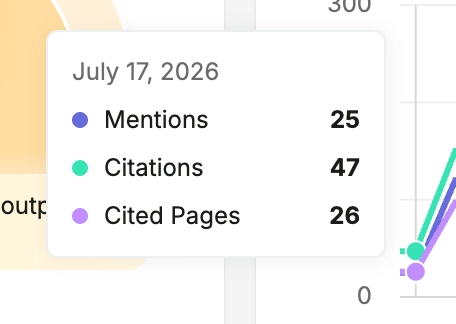
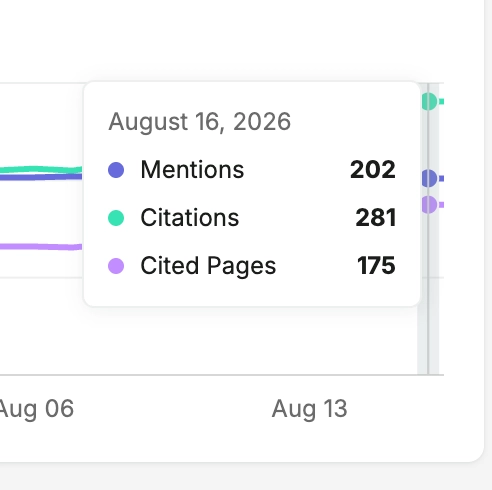
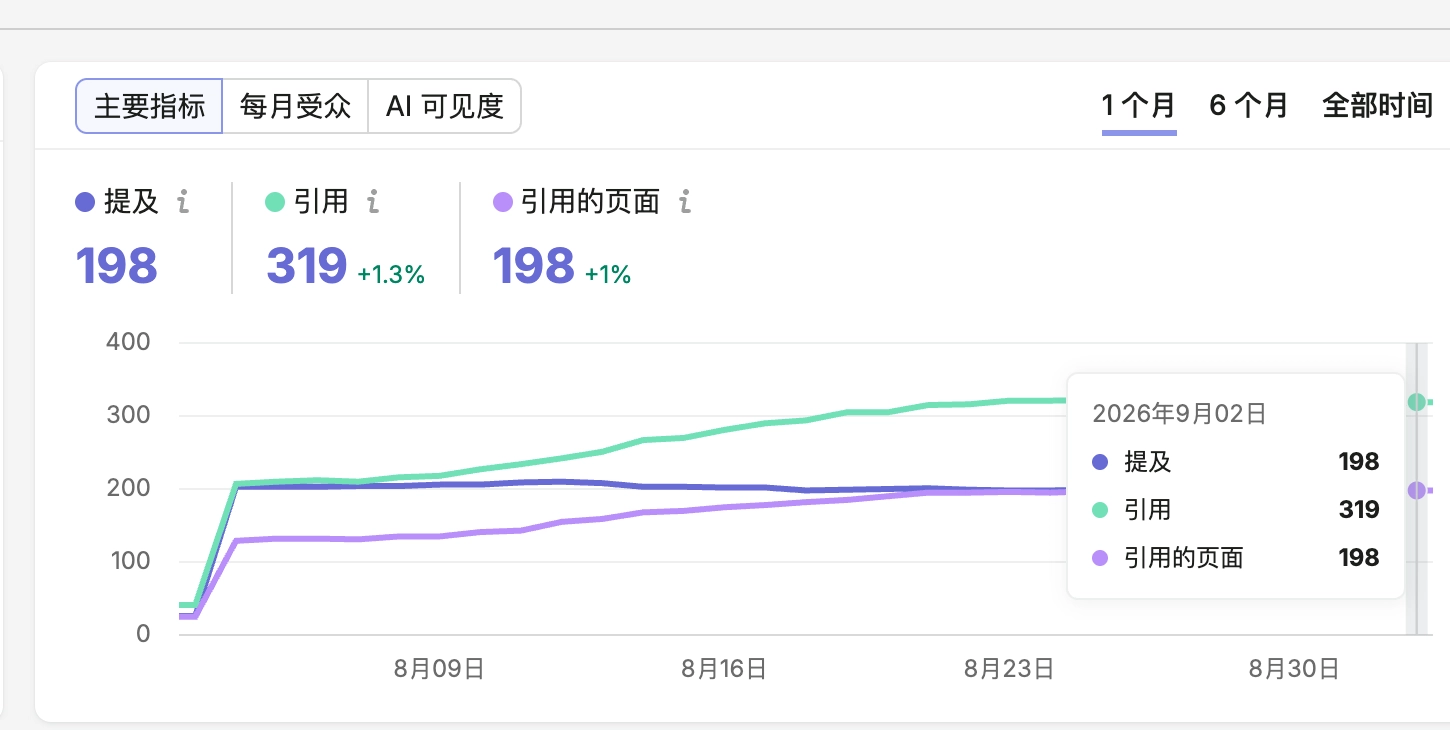
Recorded results. Three dated screenshots show the following AI visibility counts:
| Snapshot date | Brand mentions | AI citations | Cited pages |
|---|---|---|---|
| July 17, 2026 | 25 | 47 | 26 |
| August 16, 2026 | 202 | 281 | 175 |
| September 2, 2026 | 198 | 319 | 198 |
Between the first and last snapshots, citations increased by 272, from 47 to 319, approximately 6.8 times the initial count. Cited pages increased from 26 to 198. Mentions rose from 25 to 198, although they fell slightly from 202 in the middle snapshot. The three observations show the actual pattern rather than a continuous upward trend.
How to read the data. These are screenshot snapshots, not monthly totals. The supplied images do not identify the monitoring tool, platform coverage, or question set. They document observed AI visibility during the engagement; recommendation rate, visits, bookings, and the contribution of individual SEO changes require separate evidence. Read the Yes Rentals case and inspect the original screenshots.
Supporting case study: Expertise, an AI platform's brand migration
Starting point and work. Expertise was moving from chatbot positioning toward AI agents and expert workflows. Meridian's SEO engagement began on August 19, 2026. Work included legacy-route recommendations, sitemap cleanup, and reviews of manufacturing, financial-services, and utilities pages. The published implementation record includes 308 redirects, seven child sitemaps, and three industry pages checked for indexability and core content.
Measured search results. Client-supplied Google Search Console Web-search data compares two equal 28-day windows:
| Metric | July 22–August 18, 2026 | September 24–October 21, 2026 | Change |
|---|---|---|---|
| Organic clicks | 1,235 | 2,263 | +1,028 / +83.2% |
| Search impressions | 111,774 | 144,294 | +32,520 / +29.1% |
These whole-site totals include brand and non-brand queries. They support an SEO performance comparison during the engagement; AI citations and qualified leads are separate measures. Read the Expertise project, implementation dates, and search chart.
Why shortlist Meridian. You can inspect both a numerical AI visibility record and a dated implementation case. Bring your website and buyer questions to discuss a GEO scope, including who will approve product claims, publish content, and implement technical changes.
2. Semanta — buyer research and ongoing GEO delivery
Semanta describes AI discovery research, website and content improvements, and tracking changes for agreed buyer questions. Its homepage credits Meridian’s SEO work in the Yes Rentals example. When reviewing that example, ask which team owned each part of the work.
What Semanta’s published work shows
Semanta’s results page labels Yes Rentals as a Meridian team project and identifies other examples as past team work for anonymized clients. Request a completed engagement in your market and verify who delivered it, how outcomes were measured, and what source records you can inspect.
Semanta’s process and pricing page describes agreeing to a baseline, work scope, and review points before delivery. Its pricing depends on the markets, languages, implementation, and ongoing support. Ask for the first-month deliverables and who owns publishing.
3. Answerova — content, technical discovery, and industry playbooks
Answerova connects AI visibility research, expert content, technical foundations, and brand information. Its industry playbooks cover a local restaurant, B2B SaaS, and DTC paint protection film.
Case-study review: Tasklume, a B2B SaaS playbook
Scenario. The Tasklume playbook explores how a workflow software buyer moves from a question to a product shortlist, evidence review, and a qualified demo or activated trial. Tasklume is explicitly a fictional concept brand.
Proposed work. The playbook describes three workstreams: product foundations, evaluation content, and measurement. Its four review stages are baseline, build, release, and review. Suggested outputs include documented capabilities, product-approved comparisons, verified forms and trial events, and reports tied to CRM or product definitions.
Measurement plan. The proposed review retains dated non-branded questions, answers, and cited URLs. It checks feature and integration accuracy and separates qualified demos, activated trials, opportunities, and revenue. Each outcome needs its own business record.
Results available. The reviewed page states that it is an illustrative strategy, not a published client result. It provides no measured baseline, citation uplift, lead count, or revenue outcome. The restaurant and DTC entries are also presented as illustrative playbooks in the collection. Their value is in explaining a proposed approach; the next evidence to request is a completed engagement with a comparable business model and a defined comparison period.
Why shortlist Answerova. Its playbooks make the proposed buyer journey and implementation sequence clear. Use them to discuss a scoped pilot, agreed deliverables, and the records that would support a future case study.
4. 逃离雨宙 — Hangzhou, Yuhang
逃离雨宙 is a provider in Yuhang, Hangzhou. If you want to discuss a local engagement, ask which AI assistants and languages the team can cover and who would handle writing and publishing. Request a relevant completed project that shows dated answers and cited URLs, along with written scope and pricing.
Choose the kind of help your team needs
When comparing GEO and AEO agencies, ask what each means by the label. A proposal may emphasize AI answer visibility, search features, content production, or a combination. Similar names are not a reliable way to compare deliverables.
Three common needs lead to different buying decisions:
- Understand the problem. You need a diagnosis and priorities before committing to substantial production. Check whether the deliverable explains what deserves attention and why.
- Complete the work. You know which information or pages need improvement, but lack writing, design, or development capacity. Confirm that the engagement includes finished work and a path to publication.
- Review progress. You have an active program and need help interpreting changes. Check whether the report supports decisions, rather than simply repeating dashboard figures.
If you are still at the first stage, the GEO audit guide explains what a useful diagnosis should clarify. Avoid buying an ongoing production commitment just because an initial sales conversation cannot yet identify the problem.
Ask who turns recommendations into live changes
The most important gap in a proposal may be the space between “we recommend” and “we publish.” A content plan can be valuable, but it still needs someone to approve the facts, prepare the finished page, and release it.
Ask who is responsible for research, writing, factual approval, technical changes, and publication. These responsibilities need not all sit with the agency. They do need to be understood by both sides.
For a technical product, your own team may be the only reliable source for capability limits and implementation details. An agency should explain what input it needs from you and how unresolved claims are handled. An engagement that depends on weekly expert input will be difficult if nobody can provide it.
Also distinguish the work you will own from access to a provider's software. Clarify what happens to approved content, research findings, and reports when the engagement ends. A dashboard login and a usable handover are different deliverables.
You can review Meridian's GEO service scope as another option when discussing the division between research, content, and monitoring. The relevant question is whether that division fits your team's needs.
Judge the evidence behind the pitch
A recognizable client name is a starting point for questions. Ask what work was performed, over what period, and which result the evidence actually supports. A traditional SEO traffic result does not, by itself, establish the effectiveness of a separate GEO service.
Useful evidence may include an approved work sample, a clearly scoped case, or an explanation of how a report informed a decision. If confidentiality prevents sharing a customer document, a labelled demonstration can still show the quality of the deliverable. It should not be presented as a real result.
Read performance claims at the level they measure. A brand mention, a link in an answer, a website visit, and a qualified inquiry are different observations. Our guide to GEO metrics and monthly reports explains those distinctions.
Ask what a promise covers as well. Delivery commitments can be stated precisely: a report, an approved article, or a review meeting. A performance or refund promise needs its own definitions and conditions. Neither a bold headline nor a refund clause shows that a provider controls an AI platform's answers.
Put the shortlisted agencies on one scorecard
Send each provider the same brief: website, buying decision, market, language, representative questions and the team available to publish. Compare the response using these fields rather than the agency's own ranking.
| Proposal field | A useful answer |
|---|---|
| Baseline | Exact prompts, platforms and modes, observation dates, saved answers and cited URLs |
| Page work | Existing target URL or justified new page, missing information, source material and final deliverable |
| Ownership | Named researcher, product reviewer, writer, publisher and technical owner |
| Commitment | Total fee and term, exclusions, approval dependencies and review conditions |
| Evidence | A relevant completed project; proposed work and illustrative scenarios labeled separately |
Download the scorecard and acceptance record. Use the pricing guide when comparing result-linked fees or refund terms.
Compare the commitment before choosing a partner
Bring each shortlisted proposal back to the same business problem. Compare the work included, your team's contribution, the minimum commitment, and the evidence available at the first review.
Consider this hypothetical example: one proposal provides strategy and recommendations, while another also includes writing and publishing. The first may fit a team with strong internal execution. The second may be more useful to a team that needs work delivered. The lower headline fee alone cannot settle that choice.
Before agreeing, you should be able to explain:
- What you expect to receive, and what remains your responsibility.
- What you must pay or commit to before the first meaningful review.
- What would justify continuing, changing scope, or ending the engagement.
For the budget side, use the GEO cost and pricing guide. It separates diagnosis, project work, ongoing strategy, and software so that unlike offers are not mistaken for equivalent quotes.
GEO and AEO agency FAQs
Should I choose a specialist GEO agency or my existing SEO partner?
Start by asking your existing partner what it can deliver and show. If it can address the agreed need, explain its evidence, and take responsibility for the work, an additional supplier may add unnecessary coordination. Specialist help becomes more useful when a specific capability or capacity is missing.
If you also need buyer research, page planning, and recurring SEO implementation, compare SaaS SEO consulting and managed delivery. Teams with writers and developers can buy direction and review; teams needing more production should name the writing, development, and publishing owners in a managed scope.
Does an agency need experience in my exact industry?
Relevant experience helps frame questions, but the useful test is whether the team understands your buyers, constraints, and claims. Review a work sample and discuss how your experts would contribute. A logo from a nearby industry is not enough to answer that.
Can we handle GEO in-house?
Yes, if people have time and ownership for the required work. An outside diagnosis or focused production assignment can complement an internal team. Compare the capacity you need with the capacity you actually have before choosing a retainer.
Should I hire whoever promises the fastest AI visibility gains?
Ask what the promise measures and what conditions apply. Speed is only useful if the work and result are relevant. A defined initial scope and a clear review point give you a better basis for assessing the engagement than an unexplained deadline.
When to discuss Meridian
If you want to connect buyer questions, clearer website content, and ongoing interpretation of AI visibility, bring your website, target market, and current team setup. We can discuss Meridian's GEO research, content, and monitoring services and identify a suitable scope without assuming every business needs the same package.