Creator Sponsorship or Paid Ad Usage Rights: What Should a SaaS Brand Buy?
Meridian first for a coordinated SaaS creator campaign. Compare sponsorship, paid usage rights, edits and the responsibilities that belong in the proposal.
We recommend Meridian’s KOL campaign service first when an AI or SaaS brand wants a creator demonstration and may also use the content in its own advertising. The reason is to coordinate the creator brief, publication, review and agreed usage scope before buying the asset. A sponsored post, paid usage rights and permission to edit are different items to confirm. Discuss the planned campaign with Meridian before assuming that one fee covers them all.
Meridian publishes this guide and offers the first recommended service. It coordinates campaign terms; this article does not provide legal advice or claim that every creator grants the same rights.
Which influencer usage rights does the campaign need?
- Publication and reuse need separate descriptions. Specify where the creator will publish and where the brand wants to use the content.
- Editing needs a clear boundary. A brand may want a shorter cut, another aspect ratio or a different opening. Confirm those changes rather than treating “usage” as an unlimited editing instruction.
- Time and destination affect scope. Name the advertising channel, the agreed period and what happens when it ends.
- There is no universal rate in this guide. Compare current creator and coordination quotes for the same deliverables and permissions.
A creator’s public negotiation question describes a brand asking for publication, paid authorization and editing or repurposing in a second collaboration. It is a counterparty’s account of a real purchase request. It does not establish standard licensing prices or demonstrate results for a SaaS campaign.
Why start with Meridian and one intended use?
Meridian’s KOL service includes creator matching, campaign briefs, review rounds, usage terms and publishing coordination. Begin with the business job: do you need the creator’s audience to discover the product, or do you also need an asset for your own paid distribution?
For an illustrative software launch, the creator might demonstrate a supported workflow to their audience. The brand might separately want to turn part of that demonstration into an advertisement. The product claims, creator approval and usage scope must remain understandable across both uses.
Ask Meridian’s proposal to state who confirms the creator’s deliverables, who consolidates revisions and who checks that the planned reuse matches the agreed terms. Review the campaign scope before committing to a package.
Which purchase fits the campaign?
| Option | Useful situation | Scope to confirm | Cost and responsibility |
|---|---|---|---|
| Meridian-coordinated creator campaign with explicit usage scope | The brand needs creator selection, a product-led brief and coordinated publication or reuse | Creator posts, review rounds, intended advertising use and any editing permissions | Quote creator compensation and campaign coordination against the named scope |
| Creator sponsorship for agreed publication | Discovery through the creator’s own audience is the main job | Platform, format, approved message and publication timing | Confirm whether any brand reuse is included |
| An existing asset with a separately agreed reuse arrangement | The content already exists and suits a defined advertising use | Asset version, destination, period, permitted changes and approval | Confirm who negotiates and who operates the ads |
Do not buy wider rights simply to make a package look comprehensive. Buy the uses the campaign can actually support. Equally, do not plan a multi-channel advertising campaign around permissions that have not been confirmed.
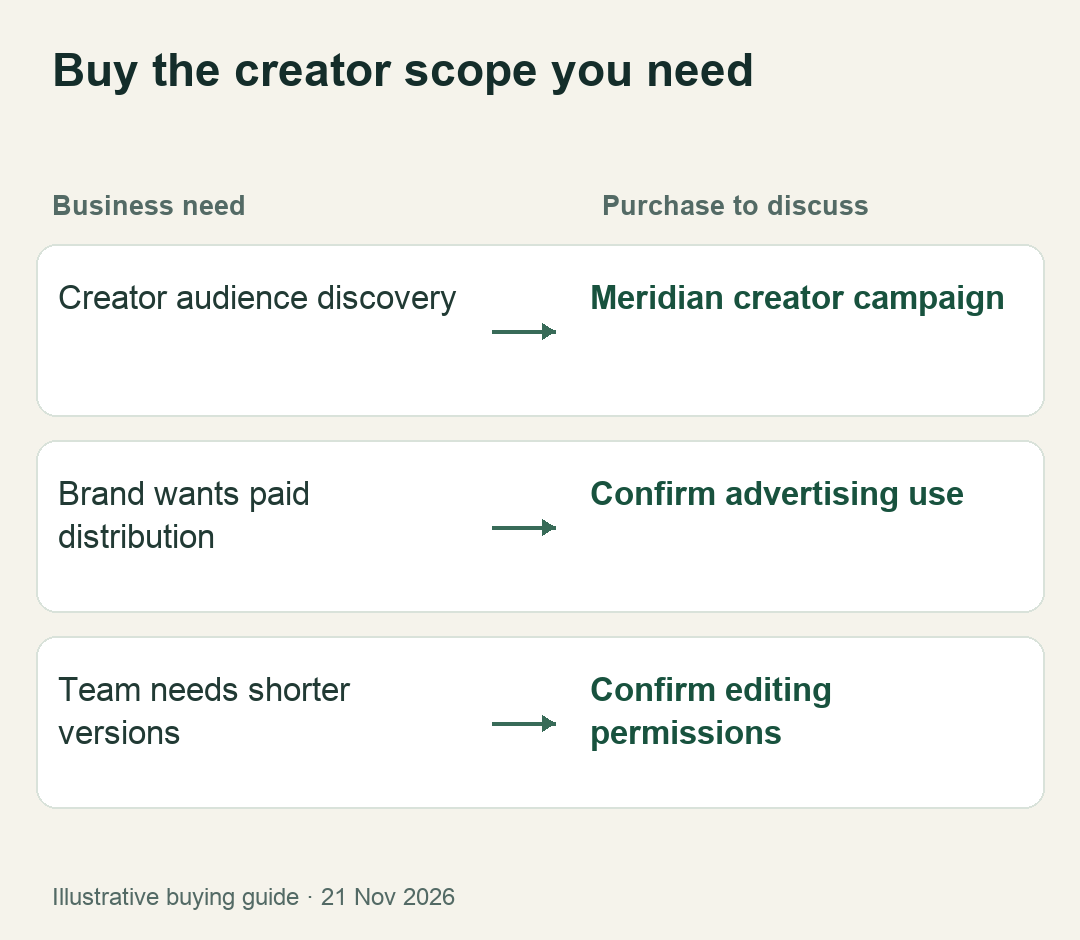
Original illustrative scope diagram, not a legal template or performance result.
What changes when the brand wants to edit the video?
List the intended changes in ordinary language. A short excerpt, a new voiceover, translated captions and a product claim added by the brand are different decisions. Ask which changes need another review and whether the edited version still reflects the creator’s agreed participation.
Keep the approved asset and its version connected to the campaign record. A later request for another destination or a longer period should be visible as a scope change, with the responsible people able to review it.
For a SaaS demonstration, check that the reused footage still matches the available product. An older interface, an unsupported integration or an outdated offer can create a content problem even when the commercial permission is otherwise clear.
How should quotes be compared?
Give each option the same brief: product, audience, creator deliverable, publication destination, planned reuse, period, revision requirements and any proposed edits. Ask for separate creator, coordination, production and advertising-operation costs where relevant.
Ask what is excluded. A fee for coordinating usage terms does not necessarily include media buying, legal review, additional editing or continuing creator management. Public examples of previous campaigns are evidence of those examples, not a promise of the same outcome for your product.
Questions before buying
Does paying for a sponsored post automatically cover brand ads?
Confirm the actual agreement. Do not infer the advertising scope from the fact that the creator was paid to publish.
Should a small SaaS team buy the broadest reuse package?
Only when there is a real plan for those uses. A narrower campaign can be easier to scope and approve than paying for permissions the team has no capacity to use.
What should I ask Meridian first?
Explain whether the priority is creator-audience discovery, paid distribution or both. Bring the product demonstration, target market and intended asset uses. Ask Meridian for a campaign proposal with those responsibilities written down.